White distilled vinegar works well on patio pavers for light organic grime, surface algae and mold discoloration, and mild mineral haze on concrete or brick pavers. Mix it 50/50 with water, spray it on, let it sit for up to an hour, scrub with a stiff brush, and rinse thoroughly. That's the core method.
How to Clean Patio Pavers With Vinegar Safely and Effectively
Dylan Hale
6 Jul 2026
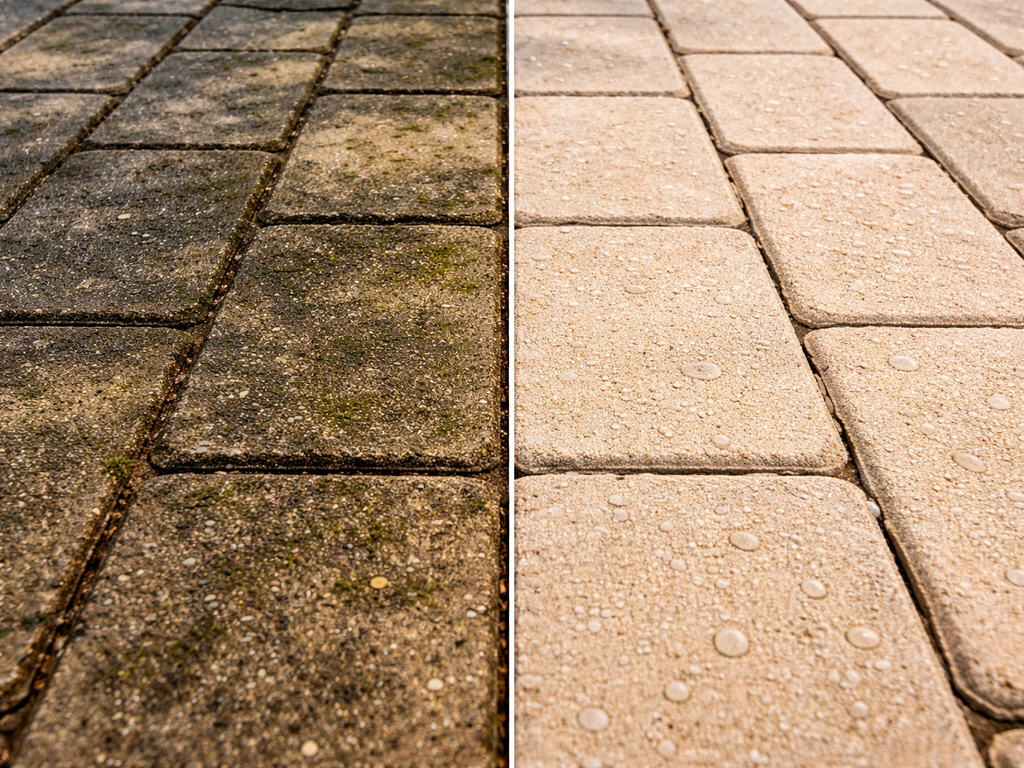
Once the surface is clean, the next step is learning how to make patio pavers shine by restoring their color and removing any dull haze That's the core method. . But vinegar is a mild acid, and on the wrong paver type it will etch and dull the surface permanently, so before you grab that bottle you need to know what your pavers are made of and whether vinegar is even the right tool for the job.
When vinegar works (and when it doesn't)
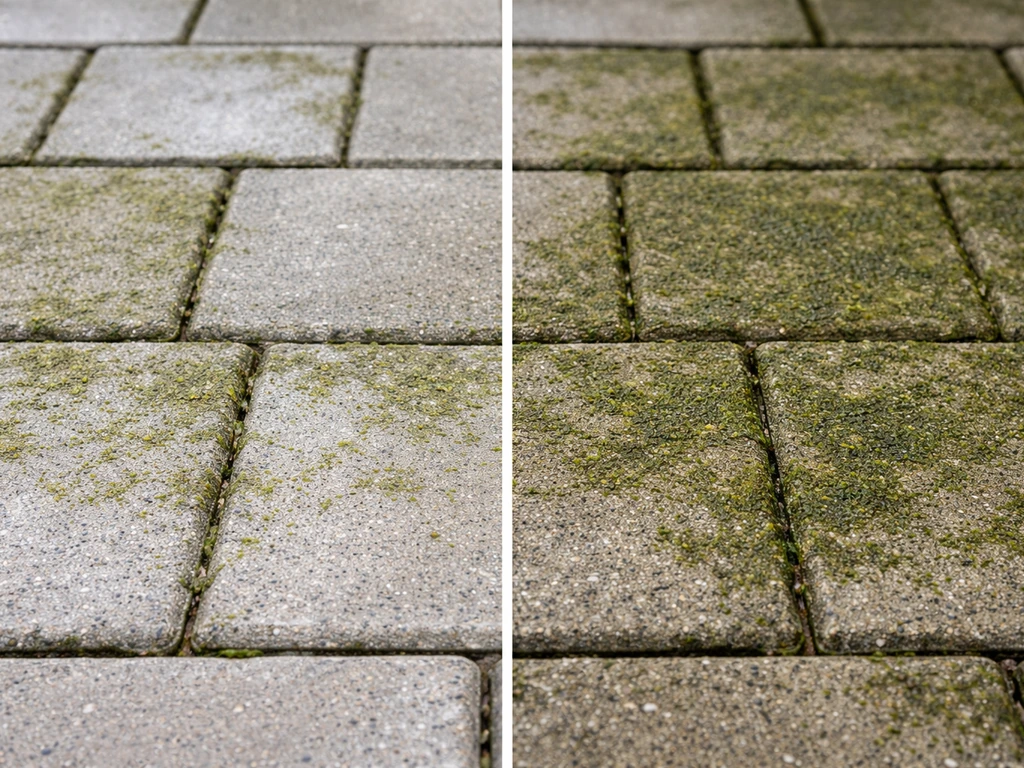
Vinegar earns its place as a patio cleaner because it's cheap, widely available, and genuinely effective in the right situations. It's an acidic solution, which means it breaks down organic matter like algae, mildew, and surface mold, and it can also dissolve some of the whitish salt deposits (efflorescence) that form on concrete and brick pavers. For routine maintenance cleaning on a concrete or brick patio that has accumulated green slime, light staining, or a faint white haze, a diluted vinegar solution is a solid first move.
That said, vinegar has real limits. I've seen people use it confidently on surfaces where it causes more damage than the original stain. Here's where it falls short or causes outright harm:
- Natural calcium-carbonate stones (travertine, limestone, marble, onyx): Vinegar reacts chemically with calcium carbonate and etches the surface, creating a dull, rough patch that can't be scrubbed back to normal. Do not use vinegar on these materials.
- Sealed pavers: If your pavers have a manufacturer coating or a sealant applied after installation, vinegar can strip that protective layer and make the surface more porous and vulnerable to future staining. Check before you clean.
- Heavy efflorescence: For thick, crusty mineral deposits, diluted household vinegar usually isn't strong enough to do the job properly. A purpose-formulated efflorescence cleaner (like Techniseal Paver Prep or similar products) will outperform vinegar here.
- Deep-set grease or oil stains: Vinegar is not a degreaser. It won't penetrate and lift heavy oil stains into the surface. You need a different approach for those.
- Polymeric sand haze: If you've recently had polymeric sand installed and you're seeing a white film, that haze may not be efflorescence at all. Mild vinegar can help with light cases, but the wrong treatment can lock the residue in further. Identify the haze type first.
- Never mix vinegar with bleach: Combining the two produces chlorine gas, which is dangerous. If you plan to follow up with a bleach-based mold treatment, rinse the surface completely and wait before switching products.
Identify your paver type and test a hidden spot
Before you mix anything, figure out what you're working with. The paver type determines whether vinegar is safe, effective, or a bad idea entirely.
| Paver Material | Vinegar Safe? | Notes |
|---|---|---|
| Concrete pavers | Yes, with care | Most common type. Diluted vinegar works well. Avoid on sealed surfaces. |
| Brick pavers | Yes, with care | Handles diluted vinegar well for mold and light efflorescence. Test first. |
| Granite | Generally yes | Granite resists acid reasonably well, but prolonged exposure can degrade it. Use diluted, short dwell time. |
| Sandstone / Bluestone | Use caution | These vary. Some handle mild vinegar, others don't. Always test first. |
| Travertine | No | Calcium carbonate based. Vinegar will etch and damage the surface. |
| Limestone | No | Same calcium carbonate issue as travertine. Acid etching is a near-certainty. |
| Marble | No | Highly reactive to acid. Even brief contact causes dulling and surface damage. |
| Sealed pavers (any material) | No | Vinegar can strip the sealant, leaving the surface exposed and porous. |
If you're not sure what your pavers are made of, check any documentation from when they were installed or look for the brand name stamped on the side of a paver at the edge of the patio. When in doubt, treat them as sensitive and default to a pH-neutral cleaner.
Even if your pavers are on the safe list, always do a patch test before cleaning the whole area. Find a spot that's hidden, under a piece of furniture or at the back corner of the patio, and apply your diluted vinegar solution to a single paver. Let it sit for 10 to 15 minutes, then rinse and let it dry completely. Look for any color change, surface dulling, or texture change. If the paver looks the same as before, you're good to go. If anything looks off, stop and use a different cleaner.
Supplies, safety, and prep steps
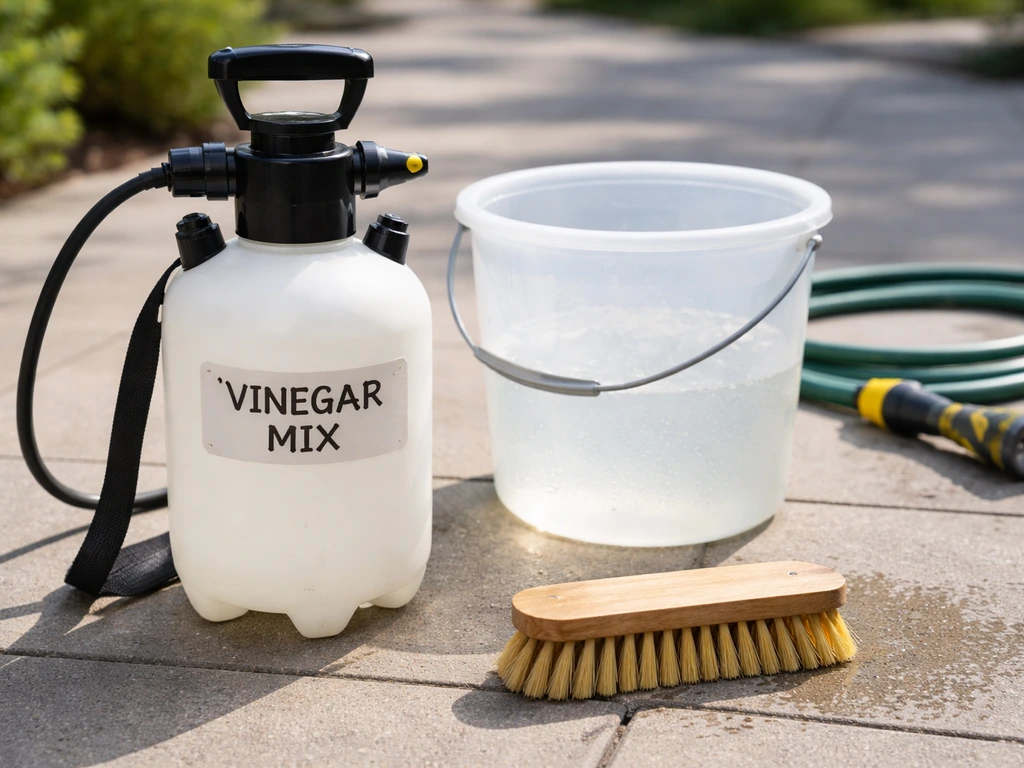
What you'll need
- White distilled vinegar (standard household 5% acidity works fine)
- Water and a garden hose with a spray nozzle
- Pump sprayer or large bucket
- Stiff-bristle scrub brush (a long-handled deck brush saves your back on large areas)
- Smaller stiff brush or old toothbrush for joints and tight spots
- Broom or leaf blower
- Rubber gloves and eye protection
- Old towels or plastic sheeting to protect nearby plants
Safety first
Diluted vinegar is low-risk, but it's still an acid. Stone Source notes that blank" rel="noopener noreferrer">marble, travertine, limestone, and onyx can react to acids, creating “acid etching” risks such as a dull sheen or texture changes. Wear rubber gloves to protect your hands and eye protection if you're using a sprayer that can create mist. Keep the solution away from your face. Most importantly: never mix vinegar with bleach or any bleach-based product. The combination produces chlorine gas. If you plan to use a bleach solution for mold after trying vinegar, flush the surface completely with clean water first and give it time before you switch products.
Prep the area
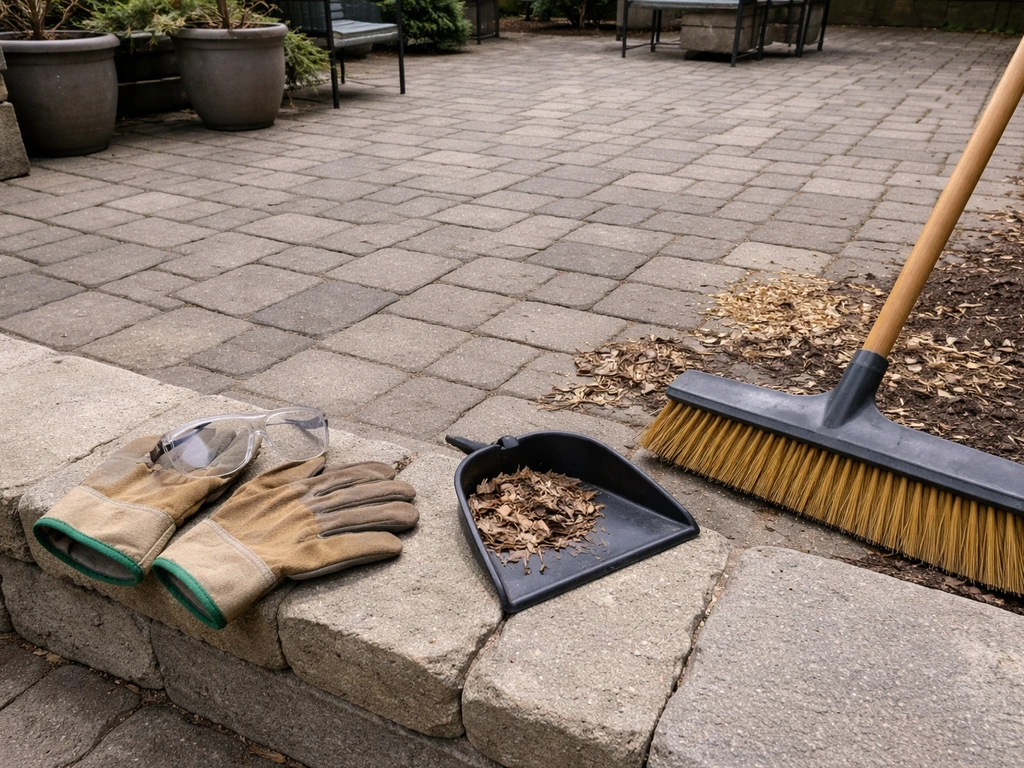
- Clear the patio: Move furniture, planters, and anything else off the surface.
- Sweep or blow off loose debris: Remove leaves, dirt, and loose grit with a broom or leaf blower. Vinegar works on the paver surface, not on a layer of debris sitting on top of it.
- Pull visible weeds from joints: Get the obvious ones out by hand before cleaning so you're not just treating around them.
- Protect plants: If you have garden beds or potted plants nearby, wet them down with plain water first and cover them with old towels or plastic sheeting. Vinegar runoff is acidic and can harm some plants, especially with repeated exposure.
- Pre-rinse the pavers: Wet the surface down with a hose before applying vinegar. This prevents the solution from absorbing too quickly into dry pavers and helps the cleaner work more evenly across the surface.
How to clean pavers with vinegar (step-by-step)
- Mix your solution: For general cleaning and surface mold or algae, mix equal parts white vinegar and water (50/50). For tougher mineral haze or heavier organic buildup, you can increase to a 75% vinegar/25% water ratio, but always start with the diluted version and only go stronger if needed.
- Apply the solution: Pour it into a pump sprayer for easy, even coverage, or use a bucket and pour directly. Apply generously to the paver surface, making sure every area you want to clean is wet with the solution.
- Let it dwell: For light grime and surface algae, 15 to 30 minutes is usually enough. For tougher staining or mineral haze, let it sit for up to an hour. Don't let it dry on the surface, especially in hot or sunny weather. If it starts to dry out, add a little more solution to keep it wet.
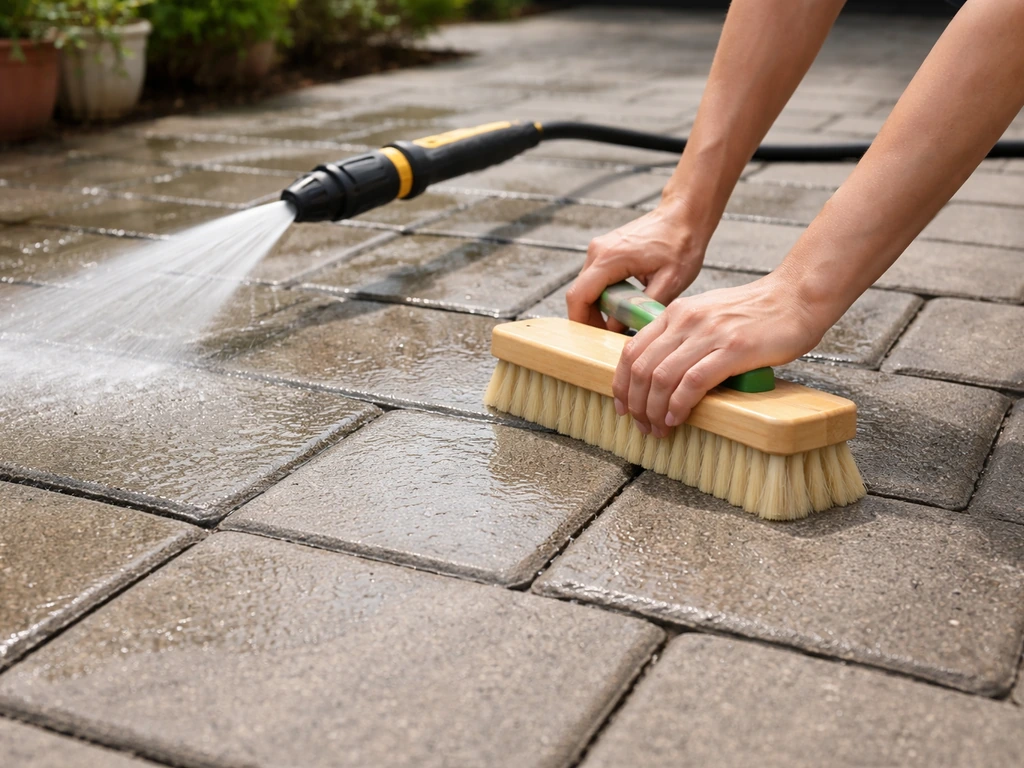
- Scrub the surface: Use a stiff-bristle deck brush and scrub in a back-and-forth motion across the paver surface. Apply firm, steady pressure. For joints, switch to a smaller brush and scrub carefully along the joint lines without digging aggressively into the sand. Be deliberate here: overly forceful scrubbing or direct high-pressure water aimed at joints will wash out the joint sand, which creates a bigger problem than the stain you started with.
- Check your progress: After scrubbing a section, take a look. You should see the surface brightening and the staining lifting. If a spot isn't responding, apply more solution and let it sit another 10 to 15 minutes before scrubbing again.
- Rinse thoroughly: Use a garden hose to rinse the entire area with clean water. Work from one end to the other, flushing the residue toward a drain or off the edge of the patio. Make sure no vinegar solution is pooling in low spots or staying in contact with the surface longer than necessary.
Tackling common problems: algae and mold, mineral spots, grease and organic stains
Green algae and surface mold
This is where vinegar performs best. The green or black-green slick you see on shaded or damp pavers is typically algae or surface mold, and diluted vinegar disrupts its structure and makes it easy to scrub away. A 50/50 vinegar-water solution applied for 20 to 30 minutes, followed by firm scrubbing, handles most surface growth. Pavestone specifically recommends equal parts vinegar and water for mildew in paver joints, which I've found works well as a starting point.
If the growth is heavy, thick, or has been building up for a long time, vinegar may only partially clean it. In those cases, a diluted bleach solution (sodium hypochlorite mixed with water per label instructions) is more effective as a biocide because it actually kills the organisms rather than just loosening them. If you go that route, do not apply bleach over vinegar residue. Rinse everything completely first, then apply the bleach solution separately. This is safe to do, as long as the products never come into contact with each other.
Mineral haze and efflorescence
That whitish, chalky haze on concrete or brick pavers is usually efflorescence, which is soluble salts migrating to the surface as water moves through the paver. Vinegar can dissolve light efflorescence on concrete and brick because the acid reacts with the salts. Allura USA suggests a dilution starting around 25% vinegar (1 part vinegar to 3 parts water) and adjusting from there, which is a reasonable conservative starting point. For moderate cases, a full 50/50 mix with a longer dwell time (up to an hour) works better.
For heavy or recurring efflorescence, I'd steer you toward a purpose-built efflorescence cleaner rather than household vinegar. Products formulated for this job (like Techniseal Paver Prep, typically diluted 1 part cleaner to 4 parts water) dissolve mineral deposits more effectively and without the risks of over-acidifying the surface. They're also engineered to avoid the harsh effects of muriatic acid while still doing the chemical work needed.
If you're seeing a white haze after a recent polymeric sand installation, note that it may be polymeric residue rather than true efflorescence, and those two problems respond differently. If you’re seeing a white haze after a recent polymeric sand installation, Dekkscape notes that white haze can appear when steps aren’t done properly and recommends using an efflorescence cleaner, such as Dekkorscape Efflorescence Cleaner, to remove haze.
Check what type of haze you have before treating it.
Grease, oil, and organic stains
Vinegar is not a degreaser. If you've got oil drips from a barbecue, cooking grease, or car fluid soaked into pavers, a vinegar solution won't penetrate and lift it effectively. For these stains, you need a degreaser product or a dish soap-based scrub first, followed by rinsing, and then you can use vinegar for any remaining surface discoloration from organic matter. For food-based stains or tannin from leaves and berries, vinegar does a reasonable job because it breaks down organic residues. Apply it directly to the stain, let it sit for 30 minutes, scrub, and rinse. If spots remain after one round, repeat the process or move to a targeted paver stain remover.
Rinsing, neutralizing, and drying: finishing the job properly
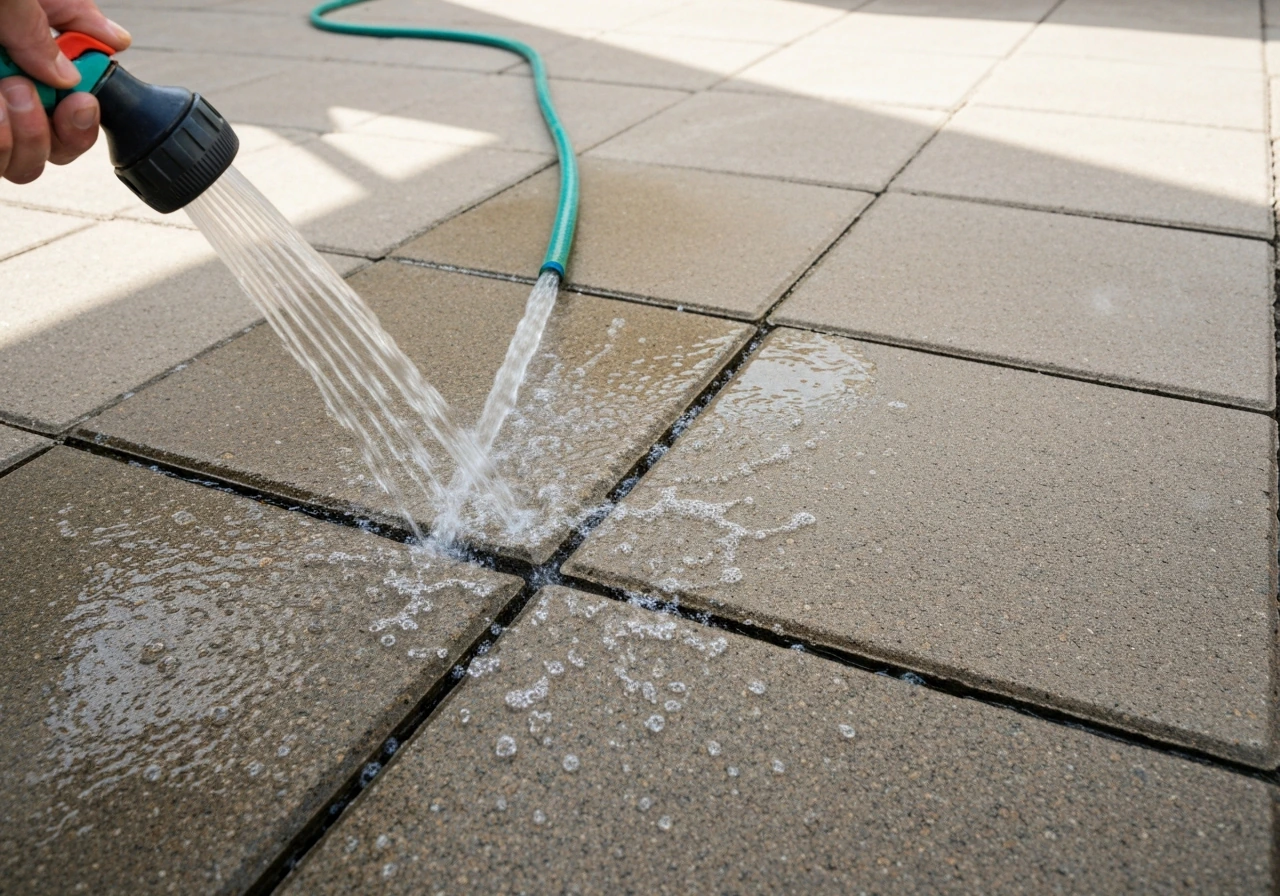
Rinsing thoroughly
A full rinse is not optional. Any vinegar left sitting on pavers, especially in cracks and joints, continues to act as an acid. Use your garden hose at a moderate pressure (not a high-pressure jet aimed at joints) and work methodically across the whole surface. Rinse until the runoff water has no vinegar smell and the surface looks uniformly wet with plain water. To finish the job the right way, follow a full rinse and make sure you dry the patio completely before sealing how to clean pavers patio. If you have a large patio, do it in sections.
Do you need to neutralize with baking soda?
For a diluted 50/50 vinegar solution on a concrete or brick paver, a thorough water rinse is generally sufficient. Some guides recommend following up with a baking soda rinse (baking soda dissolved in water) to neutralize any remaining acidity, and if you used a stronger concentration or left it on for a long time, that's a reasonable extra step. Mix about half a cup of baking soda into a gallon of water, apply it across the rinsed surface, let it fizz briefly, then rinse again with clean water. It's quick and gives you confidence the surface is fully neutral.
Drying time
Let the pavers dry completely before you assess the results or take any next steps like sealing. Once the staining and surface grime are handled, you can focus on removing scratches using the right paver repair or refinishing approach paver scratches removal. In warm, sunny weather that might take a few hours. In cool or overcast conditions, give it 24 hours to be safe. If you're planning to apply a sealant, most manufacturers recommend waiting at least 24 hours after cleaning before sealing, and some advise longer for new installations.
Prevention and ongoing maintenance
Once the pavers are clean and dry, a few simple habits will keep them looking that way a lot longer. Sweep the surface regularly to prevent organic debris from sitting in joints and feeding algae growth. Check your joints: if the cleaning washed out any joint sand, top it up before weeds take hold. If you want to clean patio pavers without removing sand, focus on pH-neutral scrubbing, careful rinsing pressure, and avoiding harsh biocides in the joints joint sand. A good-quality polymeric sand in the joints also discourages weed growth and resists erosion from cleaning.
For concrete and brick pavers that don't have a factory coating, applying a paver sealant after cleaning is one of the best things you can do to protect the surface going forward. Sealant makes future cleaning much easier and reduces stain penetration. If your pavers are newly installed, most contractors recommend waiting 30 to 90 days before sealing, to allow any efflorescence to work its way out before you lock the surface.
If you want your pavers to genuinely look refreshed and hold that look, pairing a deep clean with a quality sealant is the move. If your goal is to make old patio slabs look new, the right deep clean followed by sealing is one of the fastest ways to restore a like-new appearance freshened look with sealant.
For routine upkeep, a quick rinse with plain water and an occasional 50/50 vinegar spray in shaded areas prone to algae is all most concrete and brick patios need between full cleans. Keep the patio clear of standing water and damp organic debris, and you'll significantly slow down the return of everything you just scrubbed off.
FAQ
Can I use vinegar to clean sealed pavers or pavers with a coating?
Test first in an out-of-sight spot, and avoid vinegar on any pavers that are labeled “sealed” or “resurfaced” unless the manufacturer specifically allows acidic cleaners. Even if it does not stain, acid can dull gloss and reduce how well the sealer bonds later.
What should I do if the pavers look dull or lighter after vinegar?
Stop further vinegar use, rinse thoroughly with clean water, then let the surface dry fully. If dullness persists, neutralizing with a baking soda rinse (half cup per gallon) may help, but if you see texture etching or widespread discoloration, switch to a pH-neutral cleaner and consider a professional evaluation.
Is vinegar safe for joint sand, especially polymeric sand?
Vinegar is intended for surface grime and light growth, but acidic rinses can affect joint sand if it gets too much dwell time or if you pressure-wash aggressively. Keep dwell time controlled, rinse well, and if the patio uses polymeric sand, focus on gentle scrubbing rather than soaking the joints.
How often can I clean patio pavers with vinegar without causing damage?
For concrete and brick, vinegar can be a periodic spot treatment or seasonal maintenance, not a frequent deep-clean replacement. Between full cleans, use plain water and gentle brushing, and reserve vinegar for shaded algae or light haze so you do not repeatedly expose the surface to acid.
Will vinegar remove rust stains, paint, or rubber marks?
Vinegar works best on organic growth and some mineral haze, not on metal-based rust, paint overspray, or tire rubber. For these, use a targeted stain remover or mechanical methods, then follow with rinsing. If vinegar “lightens” but does not fully remove, do not keep repeating it expecting improvement.
Can I use vinegar in a pressure washer?
It is better to avoid pressure washer delivery for vinegar because mist and high pressure can drive liquid into joints and increase the risk of etching or joint-sand damage. Apply with a sprayer at low setting or a brush for controlled contact, then rinse with moderate garden-hose pressure.
How do I tell efflorescence haze from polymeric sand residue after new installation?
Efflorescence typically looks like a whitish, powdery salt film that appears as water evaporates, often forming in patches over time. Polymeric residue is more likely to look smeary or gritty in the joints and may show up soon after sweeping. If you are unsure, do a small spot test and avoid prolonged vinegar dwell on likely polymeric residue.
Do I need to neutralize with baking soda every time?
Usually no, if you use a diluted 50/50 mix, keep dwell time modest, and rinse until there is no vinegar smell. Neutralization helps when you used a stronger concentration, left the solution longer than planned, or you want extra reassurance before sealing.
How long should I wait before sealing after vinegar cleaning?
At least 24 hours after the pavers are fully dry is a safe baseline for many situations, but always follow the sealant label and account for weather and paver dryness. If the patio is newly installed, allow additional time since contractors often recommend longer waiting windows to let mineral issues resolve.
What’s the best approach if the algae is heavy and vinegar only partially works?
Do a full rinse, then re-treat with vinegar only if the growth is still mainly surface-located. If it is thick or long-established, vinegar may not fully kill it, so consider a biocide made for outdoor algae or follow the label directions for bleach-based products without mixing them with vinegar or allowing cross-contact.
Next Articles
How to Make Old Patio Slabs Look New: Step-by-Step
Step-by-step plan to clean, remove stains and growth, then rinse and seal concrete, brick, stone, or pavers for a like-n
How to Clean Patio Pavers Without Removing Sand
Clean mold, algae and stains from pavers while keeping polymeric sand joints intact using safe pressure and rinse steps.
How to Clean Pavers Patio Step-by-Step Best Methods
Step-by-step methods to clean pavers patios, remove stains, and protect joint sand for concrete pavers.