Sodium hypochlorite works really well on patios for killing mold, mildew, algae, and general grime. The standard mix is about 3/4 cup of bleach per gallon of water for most outdoor surfaces. Apply it with a brush or sprayer, keep the surface visibly wet for 10 to 15 minutes, scrub if needed, then rinse thoroughly. The key things people get wrong: skipping the pre-wash, using it on incompatible stone, or mixing it with other cleaners. Get those right and you'll have a noticeably cleaner patio today.
How to Apply Sodium Hypochlorite on a Patio Safely
Dylan Hale
2 Jun 2026
Is sodium hypochlorite actually good for patio cleaning?
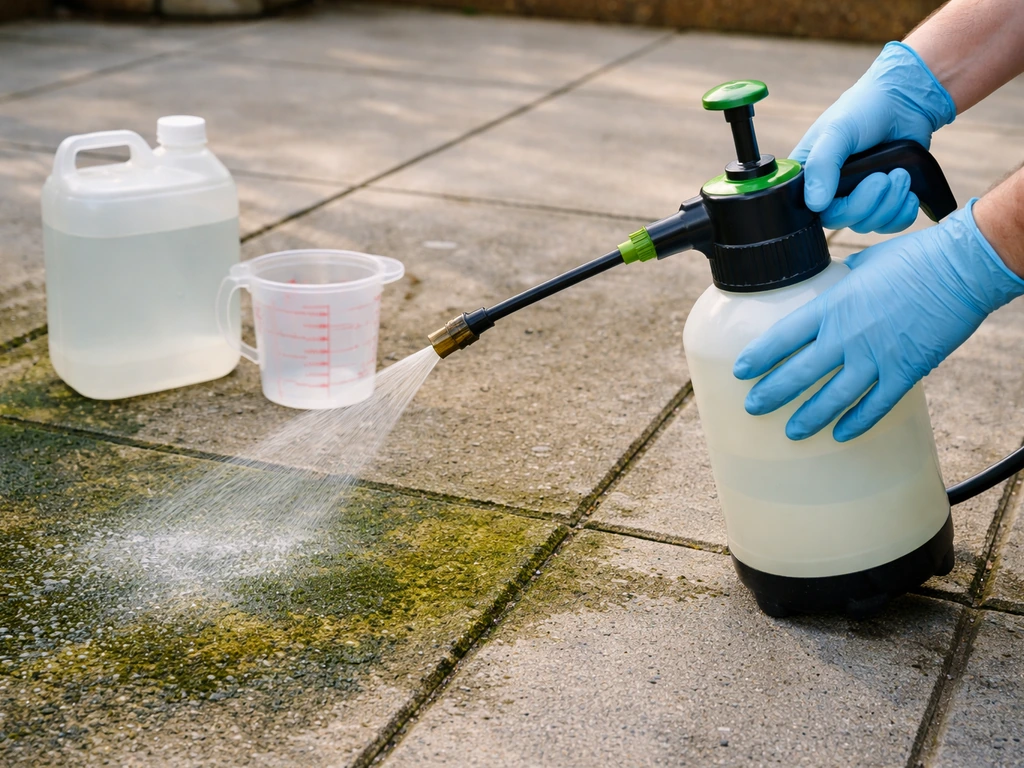
Yes, it's one of the most effective options you have for outdoor organic stains. Sodium hypochlorite is the active ingredient in household bleach and most "outdoor bleach" products you'll find at the hardware store. It works by attacking organic molecules, which makes it excellent against mold, mildew, algae, and dirt-based discoloration. It's less useful on inorganic stains like rust, oil, or hard-water deposits, so if that's your problem, you'll want a different product.
The concentration matters. Products with 5% to 9% sodium hypochlorite are the sweet spot for outdoor cleaning. If the label doesn't list a percentage, skip that product. Most standard household bleach lands around 6% to 8.25%, and dedicated outdoor bleach concentrates are formulated specifically for this kind of work. Either will do the job when diluted correctly.
What you need to know before you start
Safety gear and ventilation
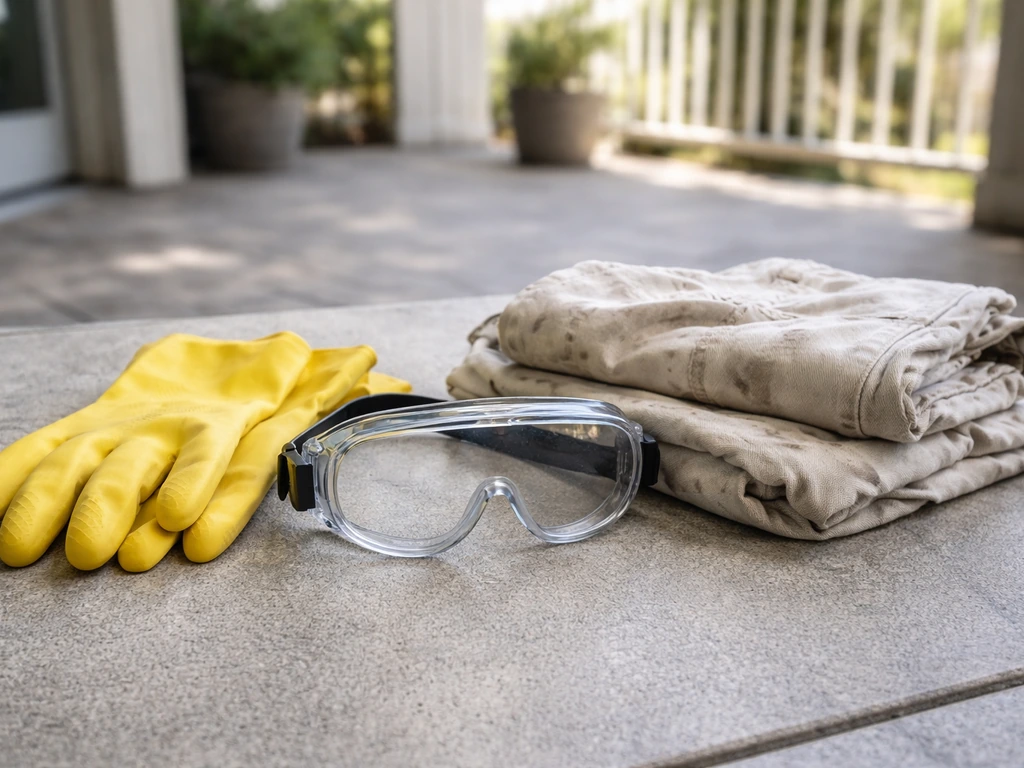
Sodium hypochlorite is a serious chemical, especially outdoors where you can get splash-back. Wear rubber gloves, safety goggles, and old clothes you don't mind ruining. If you're scrubbing in an enclosed courtyard or under a covered patio with little airflow, wear a mask too. I've seen people skip the goggles and regret it fast, so don't cut corners there.
Never mix it with other cleaners
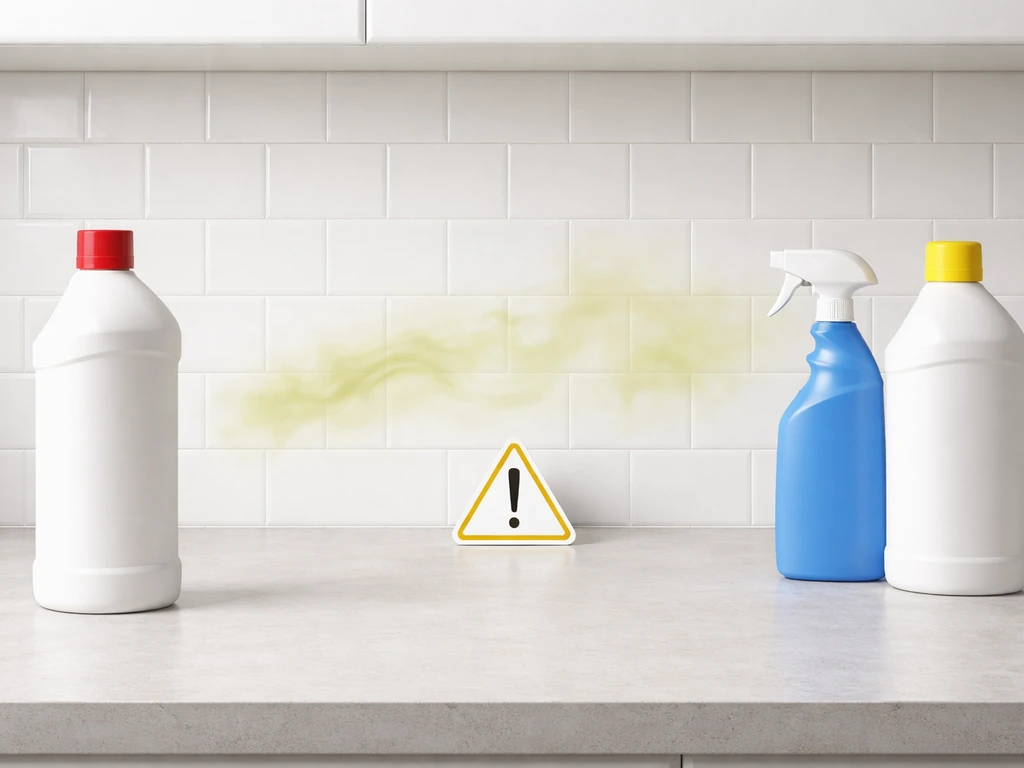
This is non-negotiable. Never mix bleach with ammonia, vinegar, or any acidic cleaner. When bleach combines with an acid, it releases chlorine gas. When it mixes with ammonia, it produces toxic fumes that can be fatal. This applies even if the other cleaner is already on the surface from a previous step. If you've used a different cleaner before, rinse the surface thoroughly and let it dry before applying sodium hypochlorite.
Check your surface first
Sodium hypochlorite is compatible with concrete, brick, and most pavers, but it can damage or discolor certain natural stones, especially polished or sealed surfaces. If you're working on travertine, limestone, or flagstone, read the material-specific section below before you do anything else. When in doubt, test a small hidden area first and wait 24 hours to see the result.
Preparing the patio before you apply anything
- Remove furniture, pots, and anything else sitting on the patio surface.
- Sweep or blow off loose debris, dirt, and leaves so they don't interfere with the bleach solution.
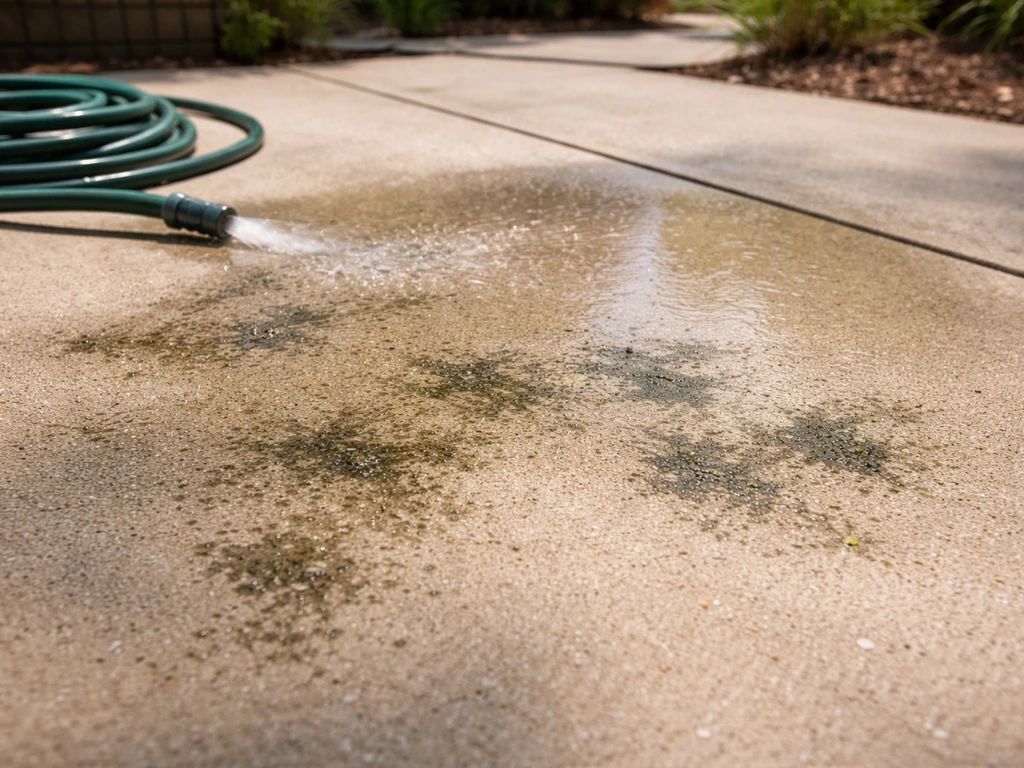
- Pre-wash the entire patio with a garden hose or pressure washer on a low setting. This step is important: sodium hypochlorite is partially inactivated by organic matter, so if there's a thick layer of grime, the bleach works less effectively. A quick rinse first makes the treatment more efficient.
- Move potted plants off the patio entirely. For in-ground plants, shrubs, or lawn edges bordering the patio, soak them with plain water before you start. A wet plant absorbs less bleach solution if any drifts or runs off. You can also drape plastic sheeting over sensitive plants.
- Wet down any adjacent surfaces you don't want bleached, like timber decking, painted walls, or metal fixtures.
- Keep pets and children out of the area until the surface is fully rinsed and dry.
How to mix and apply sodium hypochlorite on your patio
Getting the dilution right
The standard outdoor dilution is 3/4 cup of bleach per gallon of water. For a large patio or heavy mold coverage, you can go up to 1 cup per gallon, but I wouldn't go stronger than that for most DIY situations. Mix it in a plastic bucket or pump sprayer. Never mix in a metal container since bleach can corrode metal at higher concentrations.
| Task | Bleach Amount | Water Amount | Approximate Strength |
|---|---|---|---|
| General cleaning and grime | 3/4 cup | 1 gallon | Light-moderate |
| Mold, mildew, algae | 3/4 to 1 cup | 1 gallon | Moderate |
| Heavy mold or algae buildup | 1 cup | 1 gallon | Strong (max DIY) |
Applying the solution
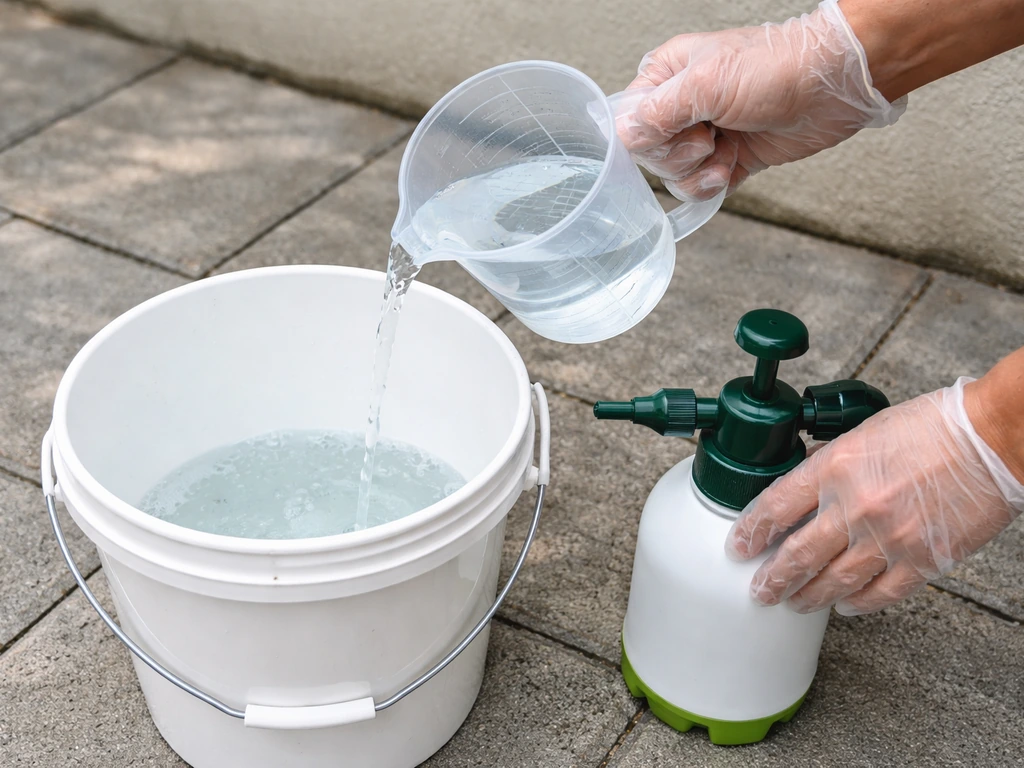
You have three practical options for application: a pump garden sprayer, a scrub brush applied directly from a bucket, or a mop for large flat areas. A pump sprayer is the easiest for full coverage and keeps your hands away from the solution. Apply in sections so you can manage the dwell time properly without any area drying out before you come back to it.
- Fill a pump sprayer or bucket with your diluted solution.
- Apply the bleach solution evenly across the section you're treating. Work from one end to the other so you're not stepping through the treated area.
- Make sure the surface looks visibly wet after application. If it's soaking in and drying quickly on a hot day, apply more.
- Let it dwell for 10 to 15 minutes. For mold and mildew, keep reapplying to maintain a wet surface for the full 10 minutes. If instructions on your specific product say differently, follow those instead.
- If the surface starts drying before the dwell time is up, mist it again with the solution.
Scrubbing and rinsing
How long to leave it and when to scrub
For light algae or surface grime on a concrete patio, you can often just let the solution dwell and rinse without much scrubbing. For anything heavier, especially mold or mildew that's embedded in the surface texture, scrub with a stiff-bristle brush after the dwell time. Letting sodium hypochlorite stay wet for about 10 to 15 minutes is a common dwell time before you scrub and rinse. Work the brush in circles or back and forth across the grain of the surface. This is where the cleaning actually happens for tougher jobs.
Rinsing safely
After scrubbing, rinse with a garden hose using a strong flow setting. Rinse generously and thoroughly. Push the runoff away from plant beds if you can. Once the patio is fully rinsed, also rinse off your scrub brush, your gloves, and your boots before you take them off. Let the patio air-dry completely.
When to repeat
If you rinse and the mold or staining is still visible once the surface dries, do a second application. Wait until the patio is fully dry first so you can accurately see what's left. Most stubborn mold will lift on the second pass. If it's still not budging after two full applications, the issue is likely deep-set organic matter that needs a longer dwell time or more aggressive scrubbing before the bleach can reach it, not necessarily a stronger mix.
Material-by-material guidance
Concrete patios
Concrete is the most forgiving surface for sodium hypochlorite. Standard dilution works well here, and you can use a stiff brush without worrying about surface damage. Bleach won't harm plain concrete, though it can lighten stained or tinted concrete over time. If your slab has a decorative stain or sealer, test a small hidden area first. For general mold, algae, and grime on concrete, this method delivers excellent results.
Brick and clay pavers
Brick and clay pavers handle sodium hypochlorite well at standard dilution. The main issue is the jointing sand between pavers, which can wash out with very aggressive rinsing. Use a controlled rinse rather than blasting at high pressure directly into the joints. Bleach will kill moss and mildew growing between pavers effectively, and it won't discolor natural red brick. Dyed or manufactured pavers with added colorants are worth spot-testing first.
Natural stone: travertine, limestone, and flagstone
This is where you need to be careful. Travertine and limestone are calcium-based stones, and while sodium hypochlorite itself isn't acidic (so it won't etch them the way vinegar would), repeated or heavy use can still cause discoloration and surface degradation over time. The GSA does list a 5.25% sodium hypochlorite solution as a valid cleaning option for darkened travertine, but the emphasis is on dilution and controlled application. If you go this route on natural stone, use the lighter end of the dilution range, don't let the solution sit longer than 10 minutes, and rinse extremely thoroughly. Avoid using it on polished or sealed stone finishes entirely.
When to avoid sodium hypochlorite altogether
- Polished or honed natural stone with a factory finish (bleach can dull the surface)
- Surfaces with existing chemical sealers you want to preserve (bleach can break down some sealants)
- Metal-inlaid or metallic-finish decorative pavers (bleach is corrosive to metals at higher concentrations)
- Any surface that has recently been treated with an ammonia-based cleaner or acidic product that hasn't been fully rinsed
When it's not working and what to try instead
Stubborn mold that won't budge
If you've done two full applications and the mold is still visible, the problem is usually one of two things: the organic layer on top is too thick for the bleach to penetrate, or the mold is physically embedded in porous concrete or stone. The fix is to scrub more aggressively before your next application to break up the surface layer first, then apply fresh solution. You can also extend the dwell time up to 15 minutes while keeping the surface wet. For EPA-registered disinfectants, the label contact-time guidance means the surface should remain visibly wet for at least the listed time, so dwell time should follow the product label for the targeted pathogen extend the dwell time up to 15 minutes while keeping the surface wet. Don't go stronger than 1 cup per gallon thinking that will help more, because at that point you're risking surface and plant damage without much cleaning benefit.
Stains that bleach won't touch
Rust stains, oil spots, and hard-water mineral deposits don't respond to sodium hypochlorite because bleach works on organic matter, not inorganic compounds. For rust, you need an oxalic-acid-based cleaner. For oil and grease, a degreaser or alkaline cleaner works far better. For hard-water scaling, a mild acid treatment is more effective, though never apply that on the same day or to a surface that still has bleach residue on it.
Gentler alternatives if you need them
If you have pets that spend a lot of time on the patio, or if you're working near a large garden bed and runoff control is difficult, a gentler option like diluted white vinegar can handle mild algae and surface grime with less risk to surrounding plants. It takes more scrubbing and works more slowly, but it's a reasonable option for lighter jobs. Baking soda paste works well for surface-level staining on concrete as a low-risk first step. These alternatives won't kill deep mold the way sodium hypochlorite does, but for maintenance cleaning between heavier treatments they're worth considering.
Pressure washing as a complement (not a replacement)
Pressure washing before a bleach treatment is a great combination for heavy buildup. Pressure washing before a bleach treatment is a great combination for heavy buildup, so if you are thinking about can you bleach concrete patio use this step to boost results. Blast off the surface grime first, then apply sodium hypochlorite to kill what's left. Just be cautious about pressure washing alone as a substitute: high-pressure concentrated in one spot can etch concrete, create swirl marks, or chip paver edges. On porous surfaces, aggressive pressure can also push water deeper into cracks, which causes more problems later. Use a wider fan tip and keep the nozzle moving if you go this route.
If you want to dig deeper into specific bleach-related questions for concrete, there's useful related ground to cover on whether you can bleach concrete patios specifically, how long to leave sodium hypochlorite on different surfaces before rinsing, and whether general bleach products (not just sodium hypochlorite) are safe across patio materials. Each of those topics has its own nuances worth knowing before you do a full patio treatment.
FAQ
Can I apply sodium hypochlorite if the patio is hot or in direct sun?
It’s better to clean when the surface is cool and not baking in direct sun. Hot conditions can shorten dwell time as the solution dries, which reduces mold kill and can increase uneven lightening. Plan for a shaded or early/late-day window and keep the area visibly wet for the full 10 to 15 minutes.
How do I know if my patio is sealed or coated before using bleach?
Check for a glossy or slick finish, water beading, or a newer “stain-resistant” look that doesn’t soak in like normal concrete. If water beads, treat it like sealed stone or coated concrete, and do a hidden-area test first. Sealer can discolor or create patchy results, and you may need a different cleaner than sodium hypochlorite.
Is it safe to use sodium hypochlorite around plants, and how should I protect them?
Bleach residue and concentrated runoff can damage foliage and grass. Before you start, wet nearby plants lightly and create runoff control if possible (for example, a tarp or absorbent barrier near beds). After scrubbing, rinse thoroughly with a controlled hose stream and direct runoff away from plantings.
What should I do if I accidentally spill bleach on a painted wall or metal furniture?
Rinse immediately with plenty of water. Bleach can remove or lighten paint and can corrode metal surfaces, especially if it sits wet. If discoloration appears, stop treatment and clean the area again and let it dry before evaluating.
Can I use a pressure washer after applying sodium hypochlorite?
You can, but it’s usually safer to rinse with a hose first, then switch to a pressure washer only if needed. Use a wider fan tip, keep the nozzle moving, and avoid blasting directly into paver joints or porous concrete cracks. High pressure can spread runoff, dislodge joint sand, and create surface damage even if the bleach killed the growth.
Why is mold returning after a few weeks, even when I bleach the patio?
Sometimes the surface looks clean, but the organic growth remains in deeper pores or under biofilm layers, so it reappears. Another common reason is that runoff continuously brings organics back (nearby trees, roof drip lines, or poor drainage). Consider scrubbing more aggressively before the next pass, and address the source of moisture or debris.
How much sodium hypochlorite should I use if I’m using “concentrated” bleach products?
Follow the stated sodium hypochlorite percentage on the label, then target the outdoor-effective range (often around 5% to 9% when diluted properly). If your product is more concentrated than typical household bleach, use less than the standard 3/4 cup per gallon guideline unless you’ve calculated the dilution. If the label doesn’t list a percentage, skip the product.
Can I apply bleach in a pump sprayer if I need to store leftover solution?
It’s best to mix only what you’ll use. If you must store, label the container, keep it tightly closed, and store out of sunlight and away from children or pets, but plan to use it promptly rather than days later. Don’t store in metal containers, and never store near cleaners you might accidentally combine later.
What if I see white residue or streaks after rinsing?
Streaks often come from uneven application, solution drying too fast, or incomplete rinsing. Re-rinse thoroughly with a stronger hose flow, then let the surface dry and inspect. If residue persists, do a second application using the same dilution but apply in smaller sections to maintain consistent wet dwell time.
How long should I wait after bleaching before walking on the patio or putting furniture back?
Let the patio air-dry completely before walking barefoot or replacing items, since damp bleach residue can transfer and irritate skin or damage fabrics. For metal furniture or cushions, wait until the surface is fully dry and any odor has dissipated, and consider wiping contact areas lightly with clean water first.
Next Articles
How Long to Leave Sodium Hypochlorite on a Patio
Know exact dwell times for sodium hypochlorite on patios by surface, overnight safety, dilution, and step-by-step use to
Can You Clean a Patio With Bleach? Safety and Steps
Learn if bleach is safe for concrete, brick, pavers, and stone, plus exact dilution, timing, scrubbing, and rinsing step
Can You Bleach Concrete Patio? Safe Step-by-Step Guide
Yes, learn if bleach suits concrete patios and follow a safe dilution, wetting, dwell, scrub, and rinse step-by-step.