Acid washing a concrete patio means applying a diluted acid solution to dissolve the weak surface layer (called laitance), lift mineral scale, and etch the concrete slightly so it's clean and ready for paint, sealer, or just looks fresher. Done correctly, it's one of the most effective ways to tackle stubborn efflorescence, algae staining, or old residue that scrubbing alone won't touch. Done wrong, it leaves the surface over-etched, blotchy, or still coated in salt residue that causes adhesion failures later. This guide walks you through every step so you get the result you're actually after.
How to Acid Wash Concrete Patio Step by Step Safely
Dylan Hale
29 Apr 2026
What acid washing actually does to your concrete
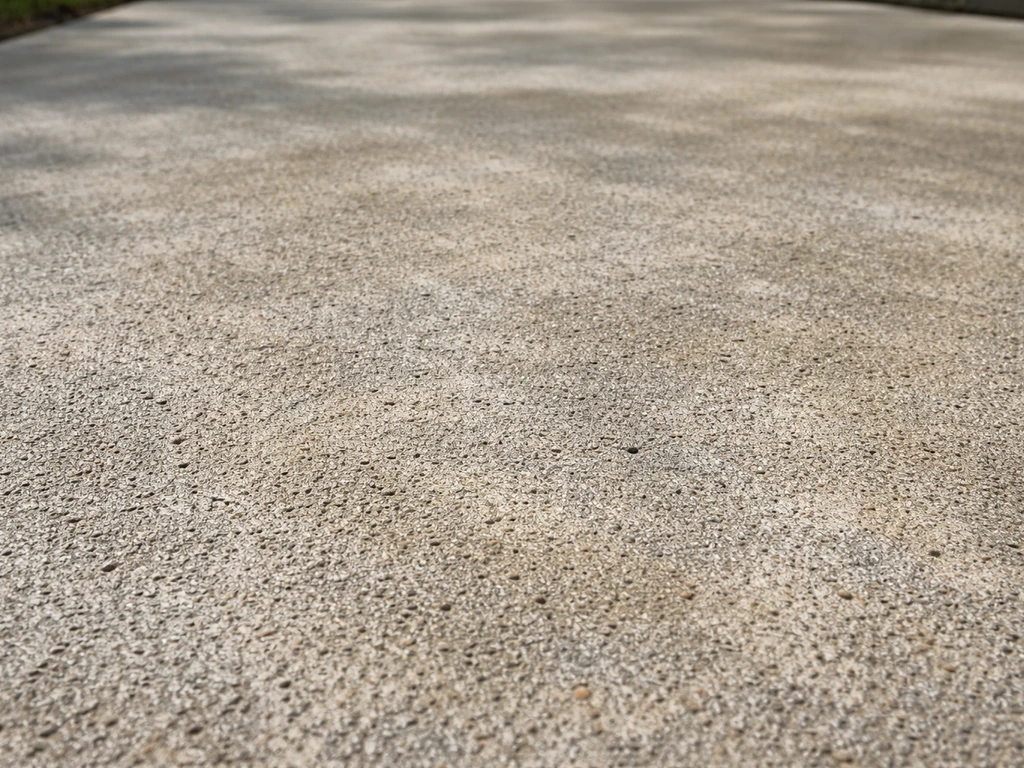
When acid hits concrete, it reacts with the calcium carbonate and other cement compounds in the surface layer, dissolving the weak, milky paste (laitance) that forms during curing. That reaction exposes the fine aggregate underneath and creates a slightly rough, open surface profile that looks like very fine sandpaper. That profile is what makes sealers and coatings bond properly instead of peeling off in sheets.
The key word is 'slightly.' Acid etching is not deep cleaning in the way pressure washing is. It's a controlled chemical reaction that removes a thin, compromised surface layer and opens pores. If your concrete is just dirty from pollen or mud, you probably don't need this. Where acid washing earns its place is when you're dealing with efflorescence (the white chalky mineral deposits), stubborn algae or mold staining that won't budge, old surface residue from a prior sealer or paint, or when you're prepping the slab to receive a new coating and want maximum adhesion. A gentle approach to scrub concrete patio grime can help you avoid over-etching when the goal is just to freshen up the surface. If you want your patio to look fresher without damaging the surface, follow the same prep, etch, rinse, and aftercare steps outlined here worn rather than just dirty or stained.
One thing worth knowing upfront: acid etching is meant for bare, unsealed concrete. If your patio has an existing sealer or paint coating, the acid won't reliably penetrate it, and you'll get patchy, uneven results. Strip the old coating first, then etch. Also, if your concrete is very dense and smooth from being over-troweled, it may barely react at all, which is actually a signal that you need mechanical preparation (grinding) rather than chemical etching. You can test this easily: pour a few drops of water on the surface. If it soaks in within 30 seconds, acid etching should work. If it beads up, the surface is too dense or still sealed.
Supplies you'll need: acids, safety gear, and tools
Choosing your acid
Muriatic acid (hydrochloric acid, usually sold at about 31% concentration) is the traditional choice and the most aggressive option. It reacts fast, cuts through efflorescence and mineral scale quickly, and is widely available at hardware stores. The downside is that it produces harsh fumes, is corrosive to any metal it contacts (including steel furniture, aluminum edging, or your tools if you're not careful), and requires careful dilution and handling. For most homeowners doing a basic patio clean and prep job, I'd actually recommend starting with one of the gentler alternatives.
Phosphoric acid is a solid middle-ground option. Products like Miracle Sealants Phosphoric Acid Cleaner dilute at roughly 15 parts water to 1 part acid and dwell for 1 to 5 minutes. It's less fumy, less corrosive to metals, and still effective on mineral deposits and light efflorescence. Sulfamic acid comes as a powder you dissolve in water and is often recommended for gentle etching or rust stain removal. Citric acid is the gentlest of the bunch and works fine for light cleaning and mild surface prep, though it won't tackle heavy efflorescence the way muriatic will.
| Acid Type | Best For | Strength/Risk | Fumes | Eco Impact |
|---|---|---|---|---|
| Muriatic (HCl) | Heavy efflorescence, aggressive prep, old residue | High | Strong, harmful | High, requires careful disposal |
| Phosphoric acid | Moderate mineral deposits, general prep | Medium | Mild | Moderate |
| Sulfamic acid (powder) | Rust staining, gentle etching | Low-Medium | Very low | Lower |
| Citric acid | Light cleaning, mild surface prep | Low | None | Low |
My honest recommendation: if you're prepping for a sealer and dealing with moderate staining, start with phosphoric acid. If you've got heavy mineral scale, persistent efflorescence, or you need a more aggressive etch for a thick coating system, go with muriatic. Save citric or sulfamic for situations where you have pets or garden beds close by and runoff is a real concern.
PPE and tools
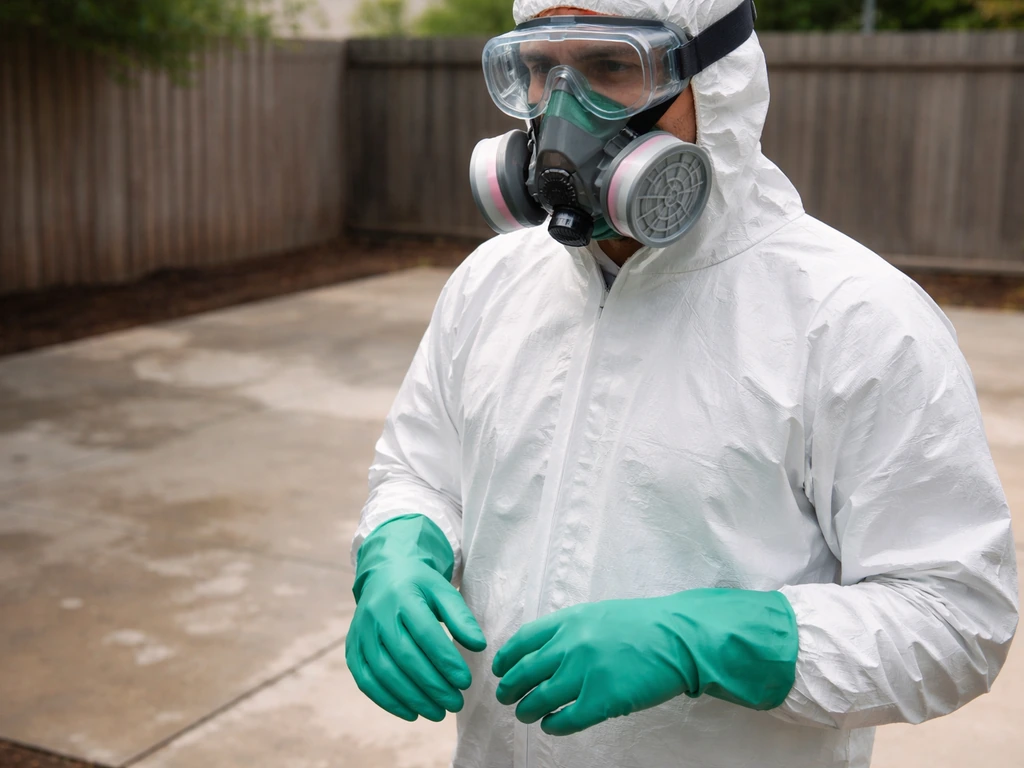
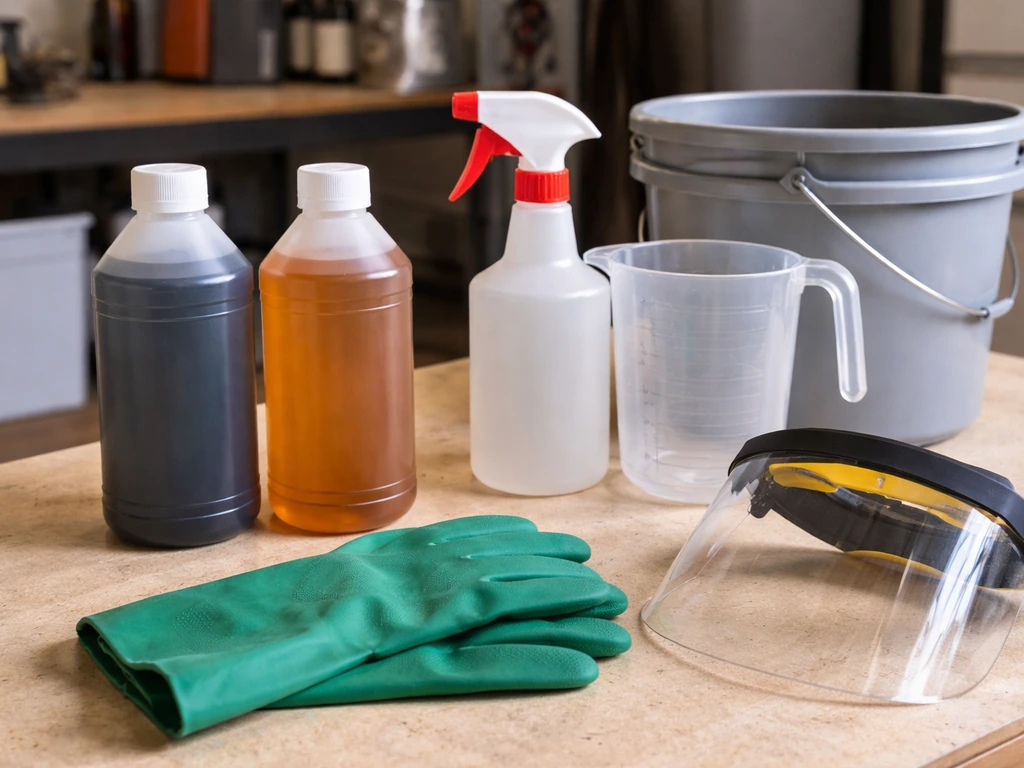
Don't skip the protective equipment. Acid on skin or in your eyes is a genuine emergency, not a minor irritation. At minimum you need: chemical-resistant gloves (not standard latex, get nitrile or neoprene), safety goggles with side shields (not just glasses), old clothing that covers your arms and legs, and rubber-soled boots. If you're using muriatic acid, add a respirator rated for acid fumes (N95 is not sufficient; you want an organic vapor respirator with acid gas cartridges). Work outdoors with a breeze at your back, not in your face.
- Chemical-resistant nitrile or neoprene gloves
- Chemical splash goggles with side shields
- Acid-gas respirator (required for muriatic acid; recommended for others)
- Old long-sleeve shirt, long pants, and rubber-soled boots
- Plastic watering can or garden sprayer (not metal) for applying acid
- Stiff nylon-bristle brush or push broom (not metal bristles)
- Garden hose with strong flow, or pressure washer
- Plastic buckets (at least two: one for mixing, one for neutralizer)
- pH test strips
- Baking soda (sodium bicarbonate) for neutralization
Prep work: clearing the area and protecting everything around it
This step matters more than most guides let on. Acid runoff that hits your lawn, garden beds, or ornamental plants can cause real damage. And if you skip cleaning the surface first, the acid will spend its reaction time on loose dirt and debris instead of the concrete itself, giving you uneven results.
- Remove all furniture, pots, grills, and anything else from the patio completely.
- Sweep or blow off all loose debris, leaves, and dirt.
- Pre-wet any plants, grass, or garden beds adjacent to the patio thoroughly with plain water. This dilutes any acid that might reach them.
- Cover plants within 3 to 4 feet of the patio edges with plastic sheeting weighted down at the edges.
- Tape plastic sheeting over any metal fixtures, door thresholds, or aluminum edging bordering the patio. Muriatic acid will pit and corrode them.
- Wet down the concrete slab itself with clean water before applying acid. A pre-wetted surface helps the acid spread more evenly and prevents it from soaking in too fast in dry spots.
- Check the weather: don't acid wash in direct hot sun (it evaporates too fast and over-etches) or if rain is expected within a few hours of finishing.
If your patio has an oil or grease stain, degrease those spots first with a concrete degreaser and rinse thoroughly before you apply acid. Acid won't cut through oil; it'll just react around it and leave an outline.
Mixing, applying, and timing: the step-by-step process
The golden rule of mixing
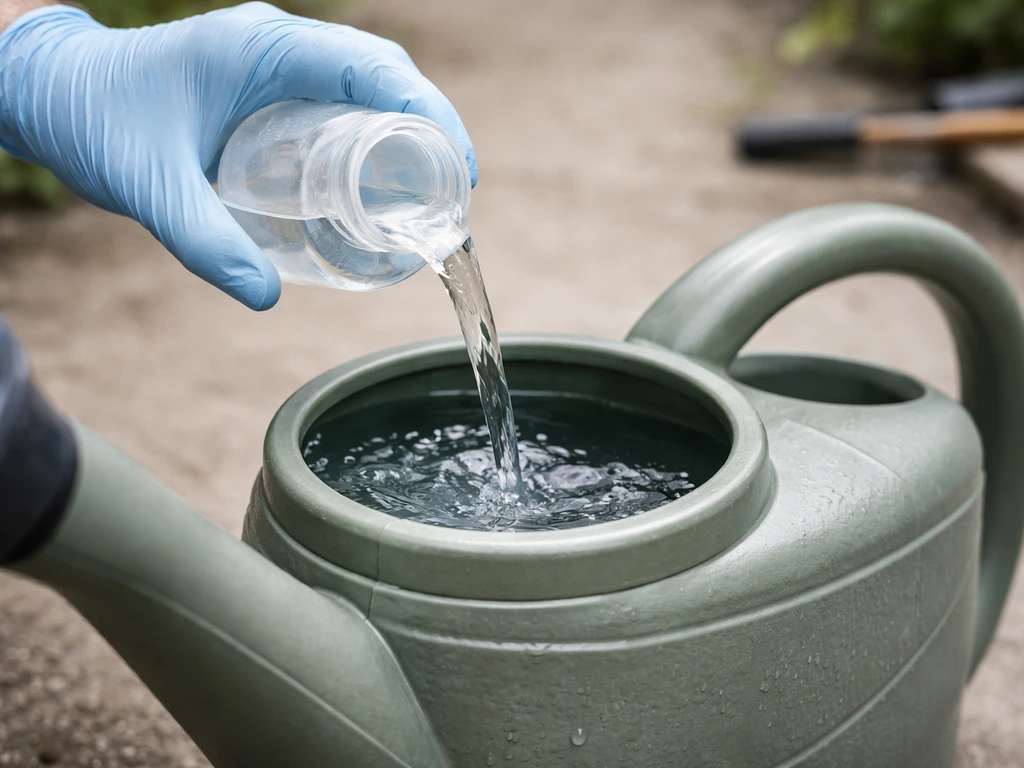
Always add acid to water. Never the other way around. Pouring water into concentrated acid can cause a violent, spattering reaction. Fill your plastic bucket or watering can with the water first, then slowly add the acid while stirring gently. This rule applies to every acid type listed here.
Dilution ratios
For muriatic acid on a typical concrete patio, start at a 10:1 dilution (10 parts water to 1 part acid). This is the safest starting point and is effective for most residential cleaning jobs. For more aggressive etching before a thick coating or epoxy, you can move to a 4:1 or 3:1 water-to-acid ratio, but I'd only go there if the 10:1 mix clearly isn't reacting. For phosphoric acid products, follow the label but a 15:1 dilution is typical. Use the most dilute solution that still does the job.
Test a small area first
Before you commit to the whole patio, wet a small, inconspicuous corner (near a wall or under where furniture usually sits) with the diluted acid and watch what happens. You want to see a steady light fizzing or bubbling. That's the acid reacting with the cement minerals, and it means the process is working. If it fizzes aggressively and fast, your solution is too strong or your dwell time needs to be short. If nothing happens at all, the surface may still be sealed or too dense, and more acid isn't the answer.
Application
- Pre-wet the entire slab with clean water so the acid distributes evenly.
- Pour or spray the diluted acid solution onto a manageable section (about 10 to 15 square feet at a time) so you can control dwell time.
- Use your nylon-bristle brush or push broom to spread the solution and work it into the surface. You'll see fizzing as it reacts.
- Let it dwell for 3 to 5 minutes. Don't let it dry on the surface. If it starts drying before you're ready to rinse, mist it lightly with water to keep it active.
- Scrub again with the brush if needed for stubborn spots.
- Rinse that section thoroughly with a strong flow of water (or pressure washer at low-medium pressure) before moving to the next section.
- Work in manageable sections across the whole patio rather than trying to cover everything at once.
Avoid letting acid solution pool or run toward drains, storm drains, or garden areas. If you're near a drain, have someone with a hose ready to dilute and flush any runoff immediately. Some municipalities require you to collect and neutralize acid rinse water before disposal, so it's worth checking local regulations if you're doing a large area.
Rinsing and neutralizing: how to finish it properly
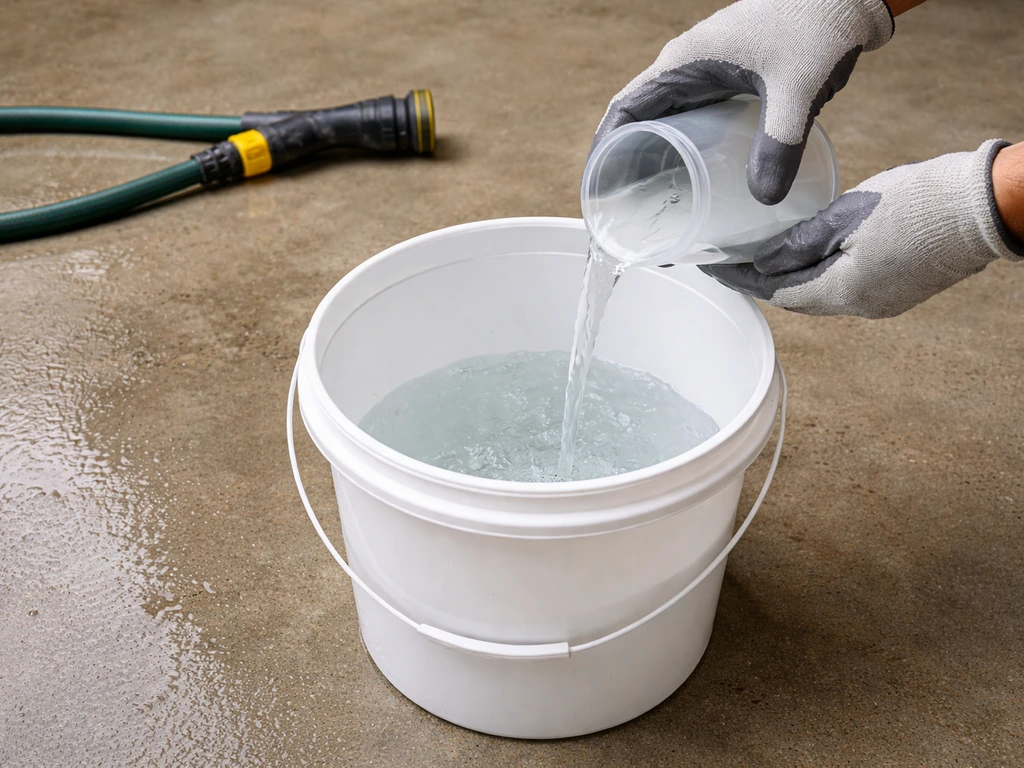
Rinsing is not optional and neither is neutralization. If you rinse and walk away, residual acid salts left on the surface will continue to cause problems: adhesion failures, efflorescence returning faster, and continued degradation of the concrete. I've seen people skip this step and wonder why their new sealer peeled within months.
- After you've rinsed each section thoroughly with clean water, mix a neutralizing solution: dissolve 3 to 4 tablespoons of baking soda (sodium bicarbonate) per gallon of water in a clean plastic bucket.
- Apply the baking soda solution across the entire patio with a watering can or brush and scrub it in. You may see some light fizzing where residual acid is still present.
- Let the neutralizer sit for 2 to 3 minutes, then rinse the entire surface thoroughly with clean water.
- Test the surface with pH strips. You're aiming for a pH of 6 to 8 (neutral). If the reading is still below 6 (still acidic), apply another round of baking soda solution and rinse again.
- Keep rinsing and testing until pH strips show neutral. Don't skip this even if the surface looks clean.
After the final rinse, do a visual sweep of the area. The surface should look uniformly lighter and slightly textured, not blotchy or shiny in patches. If you see shiny or smooth spots surrounded by etched areas, those sections may still have sealer or residue. Make a note of them for troubleshooting.
Troubleshooting: when the results aren't what you expected
The stain is still there
Acid etching isn't a magic eraser for every stain. It works on mineral deposits, efflorescence, and surface residue because those are calcium-based. It does not effectively remove oil, grease, tire marks, or rust in all cases. If a rust stain remains after etching, try a dedicated rust remover product containing oxalic acid or a commercial concrete rust remover. For oil stains, you need a degreaser, not an acid. If algae or mold keeps coming back despite the etch and a good rinse, the issue may be moisture intrusion from beneath the slab that no surface treatment will solve long-term.
The surface looks blotchy or uneven
Blotchy results usually mean the acid reacted unevenly because the surface wasn't uniformly pre-wetted, the acid dried in spots before you rinsed, or part of the slab still had old sealer. If it's a pre-wet issue, you can do a second light pass with fresh diluted acid on the affected areas. If old sealer is the problem, you'll need to use a chemical stripper or mechanical grinding on those sections before re-etching.
The concrete looks over-etched or pitted
If the concentration was too high or the dwell time too long, you can get deeper etching than intended, leaving a rough, pitted surface. At this point, neutralize thoroughly and let the concrete dry fully before assessing. Light over-etching often looks worse wet than it does dry. If the pitting is significant, you may need to fill low spots with a concrete resurfacer before sealing. This is why I always recommend starting with the most dilute solution that gets a reaction, rather than going straight to full strength.
No fizzing at all
If the acid isn't reacting, the surface is either still sealed, painted, or too dense for chemical etching to be effective. Don't keep applying more acid. The answer here is mechanical: rent a floor grinder or angle grinder with a diamond cup wheel to open the surface, then apply a fresh coat of sealer or coating. Acid etching is a preparation tool, not a fix for every concrete condition.
When to switch to a gentler method
If your goal is general cleaning and refreshing rather than coating prep, acid washing may simply be more than you need. For surface-level grime, algae, and mold, a good scrub with a concrete-appropriate cleaner and a pressure washer or stiff brush often produces excellent results without the chemical risk. Similarly, if you have pets, young kids, or a lot of adjacent planting, gentler cleaning methods are worth the extra effort. Acid washing is a tool for specific jobs, not a first resort for every dirty patio.
Aftercare: drying, sealing, and keeping it looking good
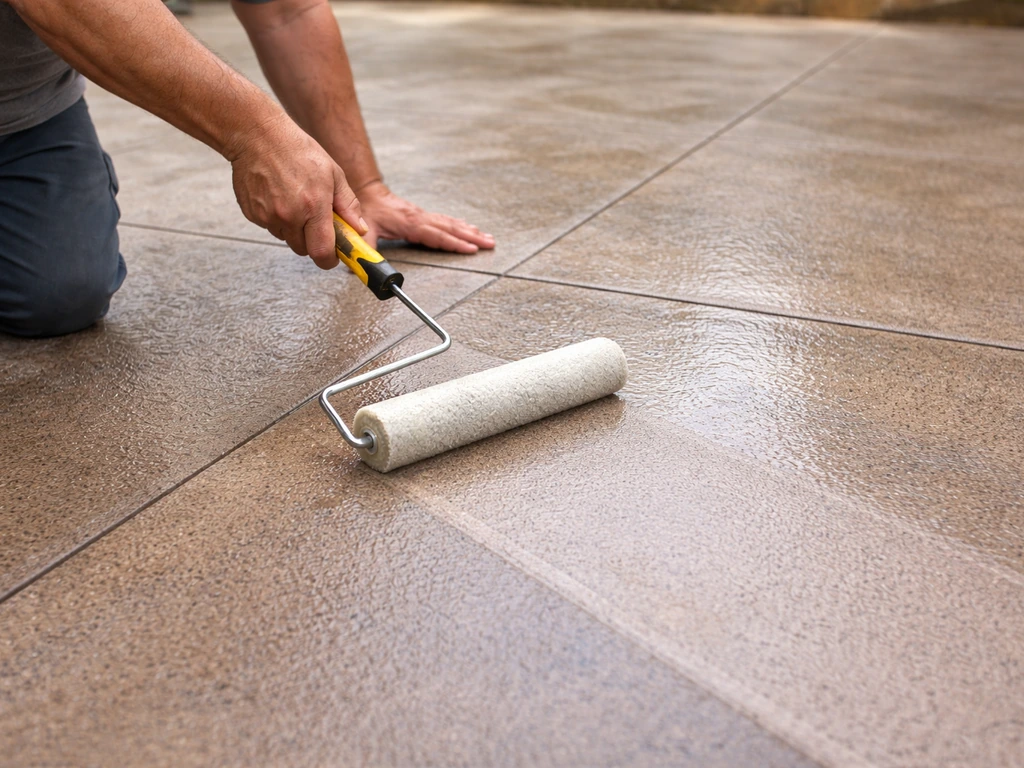
Once you've neutralized and done your final rinse, the patio needs to dry completely before you apply any sealer or coating. In warm, dry weather with good airflow, that typically means 24 to 48 hours. In humid or cooler conditions, give it 72 hours or more. Don't rush this. Sealing over damp concrete traps moisture and leads to cloudiness, bubbling, or peeling sealer, which defeats the whole point of the prep work you just did.
Once fully dry, the etched surface is ideal for applying a penetrating concrete sealer or a surface coating. A penetrating sealer soaks into the open pores created by the etch and protects the concrete from within without changing the look much. A surface sealer or epoxy coating sits on top and gives you more color or gloss options. Whichever you choose, follow the manufacturer's instructions for coverage and recoat windows. Don't apply in direct sun or when surface temperature is above 90°F.
For long-term maintenance, reseal the patio every 1 to 3 years depending on foot traffic and weather exposure. Between seal jobs, a regular scrub with a pH-neutral concrete cleaner and a stiff brush (or a pass with a pressure washer) will keep algae and grime from building up to the point where you need another full acid wash. The goal after all this work is to maintain what you've got, not start from scratch every season.
If you find after all this that your patio still looks dull or worn rather than just dirty or stained, you may be looking at a surface condition that goes beyond cleaning. Polishing the concrete or applying a resurfacing product can address cosmetic wear that acid washing isn't designed to fix. If you want a smoother, more reflective finish, follow a polishing routine designed for concrete patios after the surface is clean and fully dry polishing the concrete. Keeping up with routine scrubbing and timely resealing is genuinely the best way to avoid ever needing a heavy acid treatment again. To refresh your patio long term, keep up with routine scrubbing and timely resealing so grime and staining do not build back up.
FAQ
How long should I wait after pouring new concrete before acid washing?
For new concrete, you generally need to wait until it has fully cured (often about 28 days) and has stopped releasing moisture or laitance. Acid applied too soon can create uneven etching and trap salts that show up later as fresh efflorescence.
How do I know I’ve left the acid on too long during etching?
Stop the moment the surface changes from lightly etched to noticeably rough or pitted, then rinse. A practical check is the “wet look” rule, if it looks much more damaged while wet than when dry, you likely over-etched and should not extend dwell time.
What causes blotchy or shiny patches after acid washing, and how do I fix them?
If you see bright or shiny spots surrounded by etched areas, it often means coating residue, uneven pre-wetting, or dried-out acid. The fix is to identify the patches, strip mechanically or chemically where coating is present, then re-etch those specific areas with fresh diluted solution.
What’s the best way to neutralize and confirm the surface is ready for sealing?
You should use a pH-based approach, typically neutralizing with an alkaline neutralizer product designed for concrete acid, then rinsing until runoff water tests neutral. Avoid guessing with baking soda alone for large jobs because it can add residue and uneven neutralization.
Can I acid wash and seal the same day?
Yes, but only if it is fully dry and the etch created the right surface profile. Do not seal on top of any remaining salts or acid, if the patio dries and still feels slightly slippery or shows powdery residue, rinse again and reassess.
How big should my test spot be, and where should I place it?
It’s safer to do a full-width test patch, not just one small dot, because runoff direction and wicking from concrete edges can change results. A 2 ft by 2 ft test area gives a more realistic view of texture, color change, and whether the acid reaction is uniform.
What should I do if I have oil stains that acid washing does not remove?
For oil or grease, acid will not reliably remove the stain, it can even make it look more defined by reacting around it. Use a concrete degreaser or degreasing poultice, rinse thoroughly, let the area dry, then only etch afterward if you still need adhesion prep.
What if the water test shows my patio is sealed or too dense, should I keep using stronger acid?
If water beads up, the concrete surface is likely sealed or too dense for chemical etching. In that case, grinding or chemical stripper for coatings is the correct next step, and repeatedly adding acid will usually worsen appearance without improving adhesion.
What extra precautions should I take with muriatic acid near metal furniture or hardware?
Do not rely on muriatic acid fumes alone as a safety indicator, you need a respirator appropriate for acid gas, plus ventilation. Also protect aluminum, steel, and nearby metal objects by moving them away or covering them with plastic and protective barriers.
How can I prevent acid runoff from damaging plants or flowing into drains?
Before starting, plan a rinse route so you can flush runoff immediately, especially near landscaping or drains. On larger patios, consider working in sections so you can control dwell time and ensure each section gets rinsed before the next one traps residual salts.
Why does algae come back after I acid wash, and what should I check first?
If algae returns soon after etching, it can indicate ongoing moisture issues from beneath the slab or poor drainage, not just surface buildup. Address grading, fix sprinkler overspray, improve airflow, and consider moisture barriers or slab drainage solutions before repeating acid washing.
Is acid washing safer with phosphoric or citric acid, and can I be less careful?
Wear gloves and goggles even when using “gentler” acids, because dilution does not eliminate splash risk. Also, keep kids and pets away until the patio is fully neutralized, rinsed, and dry.
How do I tell if my patio is clean enough for a sealer after acid washing?
A good seal depends on the surface profile and cleanliness, if the concrete is still chalky or powdery after drying, adhesion will suffer. Re-rinse, neutralize again if needed, and only proceed once the surface is uniformly textured and free of residue.
Next Articles
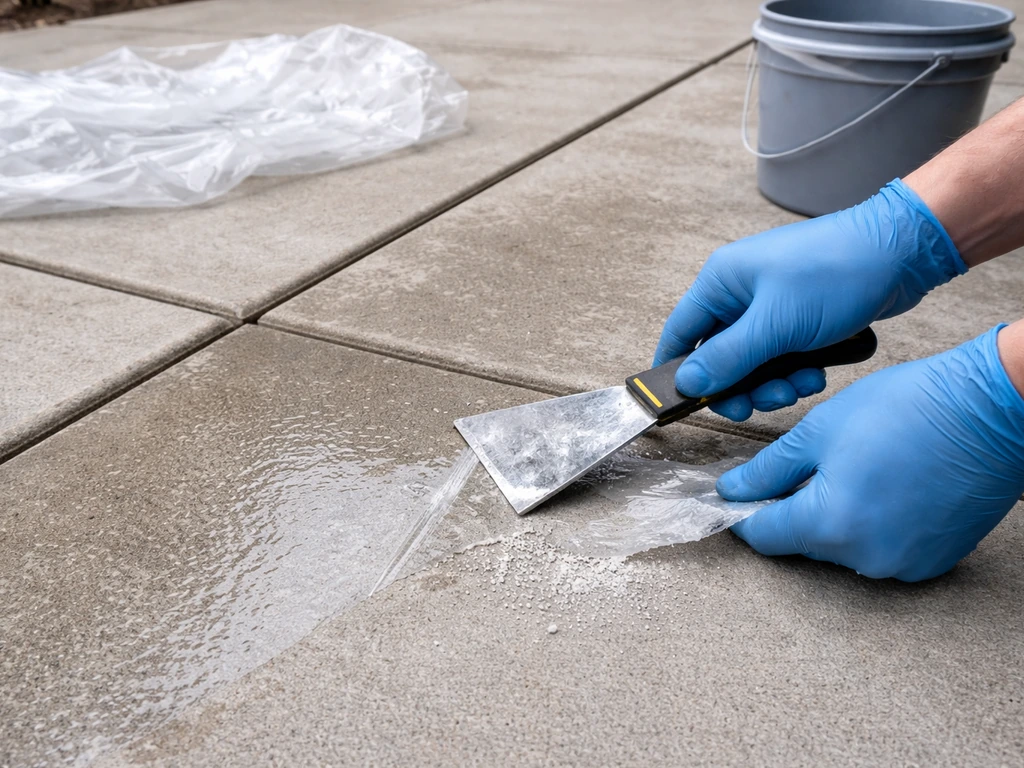
How to Remove Thompson’s Patio Sealer Step by Step
Step-by-step removal of Thompson’s patio sealer on concrete, brick, pavers, and stone, with safety, tests, and cleanup.
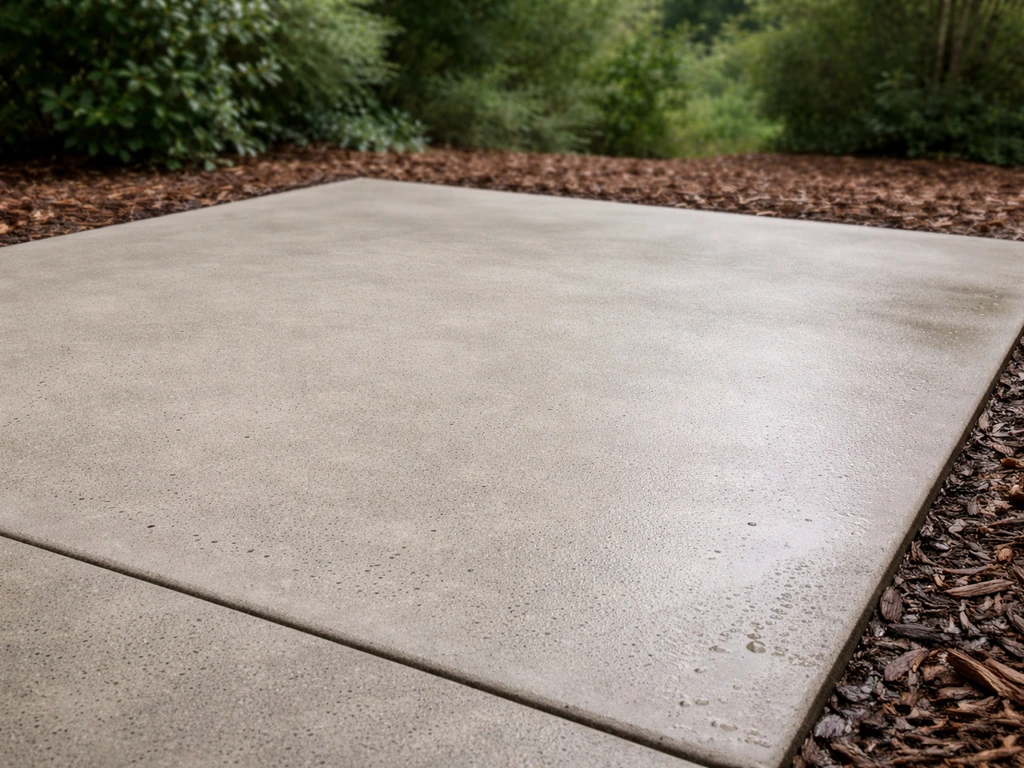
Can You Remove Patio Sealer? How to Strip It Safely
Learn if you can remove patio sealer and how to strip it safely by type, material, and method.
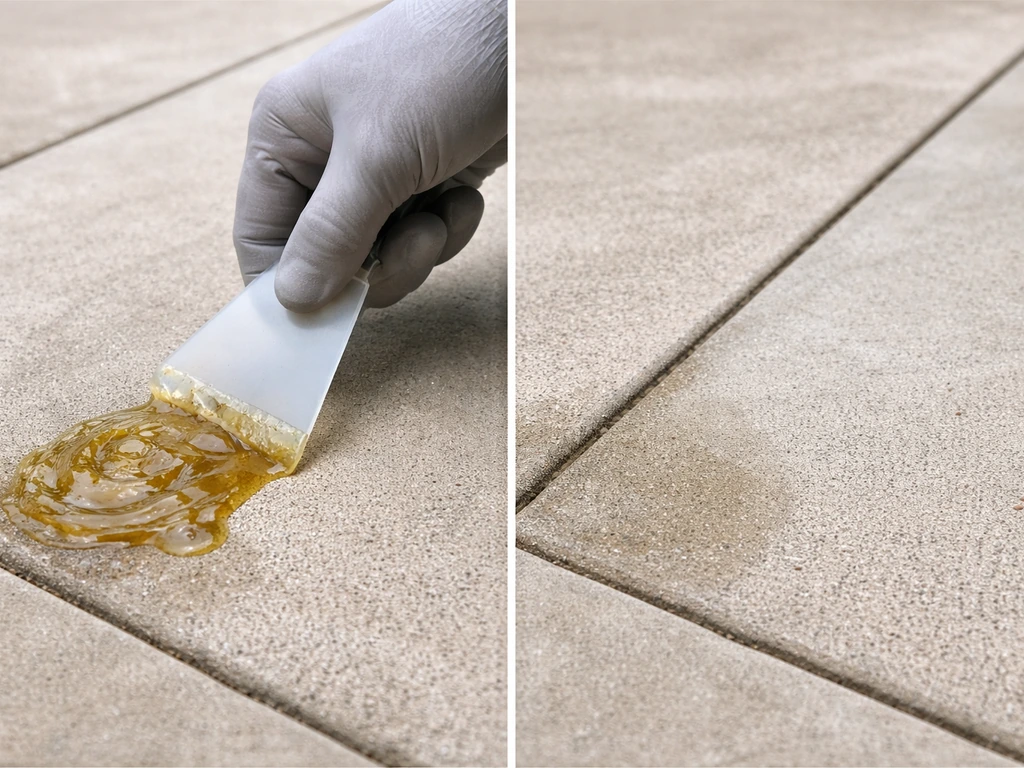
How to Remove Resin From Patio Safely by Surface Type
Step by step guide to remove resin from patio by surface type with safe scraping, softening and solvent methods.