Grass stains come off patio surfaces best with an enzyme cleaner or oxygen bleach, applied wet, scrubbed in, and rinsed thoroughly. Fresh marks need five to ten minutes of dwell time and a stiff brush. Set-in stains need a longer soak, sometimes a poultice, and occasionally a second treatment. The exact approach depends on your patio material: what works on concrete can wreck travertine.
How to Remove Grass Stains from Patio: Complete Guide
Dylan Hale
4 Aug 2026
What this guide covers and when to use each method
This guide walks you through the full process: identifying the stain type, matching it to the right cleaner, working safely, and finishing with aftercare so the mark stays gone. I've structured it so you can jump straight to your material or your stain type if you already know the basics, or read start to finish if this is your first time tackling patio staining. Grass stains are the main focus, but lawn-related stains often travel together. Lawn feed and weed-and-feed products leave iron or dye residues that look similar to chlorophyll marks but respond differently to cleaners. Leaf tannin stains and berry stains are also close neighbors. Where a method is the same, I'll say so; where it differs, I'll flag it clearly.
Use the quick-response section if you're dealing with a fresh mark right now. Use the household remedies or oxygen-bleach section if the stain is a few days old. Move to the poultice section for anything that's been sitting for weeks or that didn't fully lift on the first attempt. Reserve muriatic acid for concrete and brick only, and only after gentler options have failed.
Identifying grass stains and related outdoor stains
Grass stains are organic, made up of chlorophyll (a green dye), plant proteins, and tannins. They soak into porous patio surfaces quickly and tend to look green or greenish-brown. When fresh, they smear if you rub them with plain water. A useful field test: dab isopropyl alcohol on a small area. Grass chlorophyll breaks down readily in alcohol, so if the mark softens and lifts slightly, you're dealing with a true grass stain. Hydrogen peroxide applied directly will cause mild fizzing on an organic stain, confirming the same thing.
Lawn feed and weed-and-feed stains are a different beast. Many fertilizer blends contain iron, and the product labels often warn to sweep granules off hard surfaces before watering because iron will stain concrete orange or rust-brown. Many fertilizer labels explicitly warn: 'sweep off hard surfaces before watering, iron will stain.' 'sweep off hard surfaces before watering — iron will stain'. If the mark is reddish-orange rather than green, treat it as an iron stain, not a grass stain. Iron stains need a chelating agent (like oxalic acid or a dedicated rust remover), not an enzyme or oxygen bleach. Weed-and-feed products also sometimes contain synthetic dyes that behave more like ink stains.
Leaf stains look tan or brown and are tannin-based. They respond well to oxygen bleach but are generally less stubborn than grass stains. Berry stains are pigment-heavy and can look dark purple or black. They respond to alcohol and oxidizers but may require more passes. If you're dealing with leaf or berry staining alongside grass marks, the oxygen bleach method in this guide handles all three at once. For step-by-step instructions on removing leaf tannin stains from pavers, see how to remove leaf stains from patio pavers.
Patio materials at a glance: compatibility and risk factors
Before you apply anything, know your surface. The wrong cleaner on the wrong material can etch, discolor, or permanently damage your patio. Here's how the common materials stack up.
| Material | Porous? | Safe cleaners | Avoid | Notes |
|---|---|---|---|---|
| Concrete | Yes (unsealed) | Alkaline degreasers, oxygen bleach, diluted bleach, diluted muriatic acid (last resort) | Acids on colored/stamped concrete | Test first on stamped or colored finishes; standard gray concrete is the most forgiving |
| Brick | Yes | Oxygen bleach, alkaline cleaners, diluted muriatic acid (efflorescence/heavy buildup) | Strong acids without pre-wetting | Pre-wet brick before acid; inhibited brick acid preferred over raw muriatic |
| Concrete pavers | Moderate | Oxygen bleach, pH-neutral cleaners, diluted bleach | Concentrated acids | Sealed pavers: re-seal after cleaning |
| Natural stone (sandstone, slate, granite) | Moderate to high | pH-neutral stone cleaner, oxygen bleach (test first), enzyme cleaner | Acids, ammonia, bleach (test first) | Granite tolerates more; softer sandstone is fragile |
| Travertine | High | pH-neutral cleaner, 3–12% hydrogen peroxide poultice | All acids (including vinegar), bleach, ammonia | Calcareous stone; acid etching is irreversible |
| Flagstone (limestone-based) | High | pH-neutral cleaner, hydrogen peroxide poultice | All acids, bleach | Same acid sensitivity as travertine; test any cleaner first |
| Flagstone (slate/quartzite) | Low to moderate | Most neutral cleaners, diluted oxygen bleach | Strong acids | More durable than limestone flagstone but still test first |
The key rule I follow: if your stone is calcareous (travertine, limestone, some flagstone), treat it like a delicate surface no matter how robust it looks. Acid etching shows up as a dull haze that you cannot reverse without professional re-honing. When in doubt, stick to pH-neutral cleaners and hydrogen peroxide.
Safety first
Personal protective equipment
Wear chemical-resistant gloves (nitrile or rubber) for any cleaning job involving bleach, oxygen bleach, enzyme cleaners, or acids. Add safety glasses or goggles when using bleach or muriatic acid because splashes travel. If you're working with muriatic acid, upgrade to a respirator rated for acid vapors (P100 or combination cartridge) and work outdoors with good airflow. Household bleach is classified as a skin and eye corrosive by the CDC and most SDS documentation, so don't skip the eye protection even for dilute solutions.
Ventilation and testing
Always test your chosen cleaner on an inconspicuous area first: a hidden corner, the underside of a paver, or a small patch behind furniture. Let it sit for the full dwell time, rinse, and wait for the surface to dry before checking for color change or etching. This step takes ten minutes and can save you from a permanent mistake. Never mix bleach with acids or ammonia; bleach plus acid generates chlorine gas, and bleach plus ammonia creates toxic chloramine fumes. Keep children and pets off the patio until the surface is fully rinsed and dry.
Spill containment and disposal
When using concentrated chemicals, keep a bucket of clean water nearby to dilute spills immediately. Rinse runoff away from garden beds and storm drains where possible, especially with bleach or muriatic acid. Neutralize acid rinse water with a baking soda solution before it reaches plants or drains. Dispose of empty chemical containers according to local household hazardous waste guidelines.
Tools and supplies checklist
- Stiff-bristle scrub brush (nylon for stone; natural or nylon for concrete and brick)
- Plastic or stainless-steel scraper (for lifting dried plant debris before cleaning)
- Garden hose with a spray nozzle or a pressure washer
- Two buckets: one for solution, one for rinse water
- Enzyme cleaner (laundry pre-treat with protease enzymes works; dedicated stone/patio enzyme products are better)
- Oxygen bleach / sodium percarbonate powder (e.g., OxiClean or generic sodium percarbonate)
- 3% hydrogen peroxide (drugstore bottle) for light stains; 12% (hair-developer strength) for poulticing stone
- Poultice powder: kaolin clay, fuller's earth, diatomaceous earth, or powdered chalk (for stone only)
- Plastic sheeting and masking tape (for covering poultice)
- Household bleach (for concrete and brick only; ~5.25–6.15% sodium hypochlorite)
- Muriatic acid (for concrete and brick only, last resort; sold at ~20–38% HCl, needs dilution)
- Baking soda (neutralizer for acid rinse water)
- pH-neutral stone cleaner (for travertine and limestone flagstone)
- PPE: nitrile gloves, safety glasses, acid-rated respirator if using muriatic acid
- Old towels or absorbent rags for blotting fresh stains
Pressure washers and PSI guidance
A pressure washer speeds up rinsing and helps dislodge material from pores, but too much pressure on the wrong material causes surface erosion, joint damage, and pitting. I always start at the lower end and step up only if needed.
| Material | Recommended PSI | Nozzle | Technique |
|---|---|---|---|
| Concrete (standard) | 1,500–3,000 PSI | 25-degree (green) tip | Keep wand 12–18 inches from surface; use sweeping strokes |
| Brick | 1,200–1,500 PSI | 25-degree or 40-degree (white) tip | Avoid direct hits on mortar joints; work parallel to mortar lines |
| Concrete pavers | 1,000–1,500 PSI | 25-degree tip | Watch for loosening jointing sand; re-sand after washing |
| Natural stone (granite, slate, sandstone) | 800–1,200 PSI | 40-degree (white) tip | Low angle, wide sweep; never hold the nozzle still |
| Travertine / limestone flagstone | 500–800 PSI | 40-degree or soap (black) tip | Rinse only at these pressures; let chemical do the work |
| Sealed surfaces (any material) | 800–1,200 PSI | 25-degree or 40-degree | High PSI strips sealant; re-seal after any pressure washing |
For grass stains specifically, pressure washing alone rarely removes chlorophyll from porous surfaces. The water pressure can flush loose debris and plant matter, but the dye component needs chemical treatment first. Apply your cleaner, let it work for the recommended dwell time, then use the pressure washer to rinse. This is much more effective than trying to blast the stain out with brute force.
If you don't own a pressure washer, a garden hose on a jet setting and vigorous scrubbing achieves close to the same result on most mild-to-moderate staining. I've removed substantial grass staining from concrete with nothing more than a stiff brush, oxygen bleach solution, and a good rinse. Don't feel like the job can't be done without rented equipment.
Quick-response method for fresh grass stains
Fresh grass stains are significantly easier to remove than set-in ones. Chlorophyll and plant proteins haven't had time to polymerize and bond deep into the pore structure. The goal here is to lift as much pigment as possible before it sets, without spreading the stain wider.
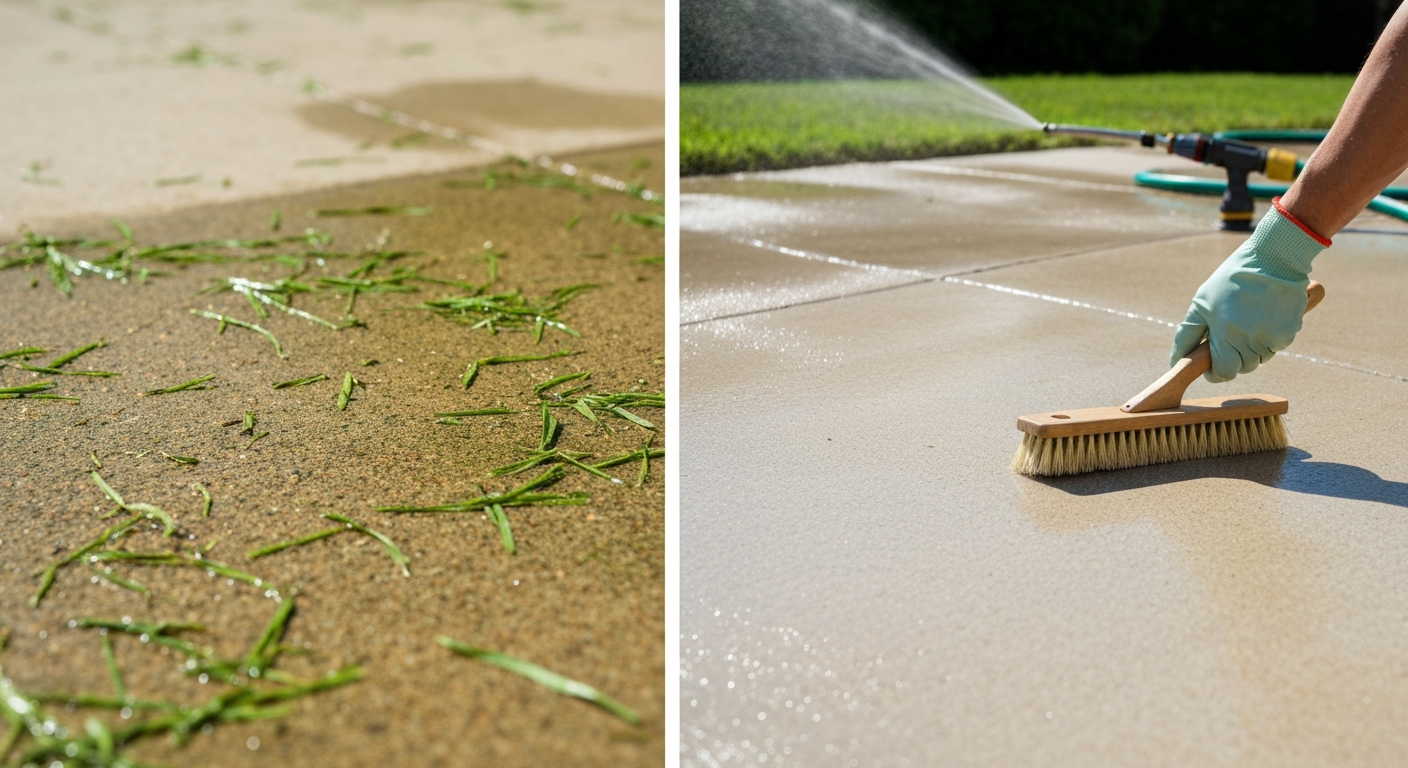
- Remove loose plant material first. Use a plastic scraper or stiff broom to lift cut grass, stems, or clumps off the surface without rubbing them in further.
- Blot (don't rub) any wet, smeared stain with an absorbent cloth or paper towel. Press down and lift straight up. Rubbing spreads the chlorophyll deeper into pores.
- Mix one tablespoon of dish soap (a grease-cutting formula like Dawn works well) with one cup of warm water. Apply to the stained area.
- Work the solution in with a stiff nylon brush using circular scrubbing motions for 60–90 seconds.
- Rinse with clean water. Assess the stain. On most surfaces this removes fresh staining partially or completely.
- If color remains, apply undiluted enzyme laundry pre-treat (or a dedicated enzyme cleaner) directly to the wet stain. Let it sit for 5–10 minutes.
- Scrub again for 60 seconds, then rinse thoroughly with a hose or pressure washer at the appropriate PSI for your material.
- If a faint shadow remains after rinsing, move to the oxygen bleach method below rather than scrubbing harder. Repeated aggressive scrubbing on natural stone can abrade the surface.
Expected result: fresh stains on concrete, brick, and pavers typically clear 80–100% with this method. Fresh stains on natural stone clear well too, but you may need a follow-up oxygen bleach treatment for the tannin component.
Gentle household remedies for older or mild stains
If the stain is a few days old or the quick-response method left a visible shadow, household remedies can still do the job without reaching for stronger chemistry. I use these first on any surface I'm uncertain about, including rentals where I want to be cautious about the patio finish.
Dish soap and warm water
Mix one tablespoon of dish soap per litre of warm water. Apply generously, scrub with a stiff brush for two to three minutes, and rinse. This works on light staining and is safe on every patio material, including travertine. It won't touch a heavy set-in stain, but it's the right starting point and removes any surface grease or residue that would otherwise block better cleaners from penetrating.
Baking soda paste
Mix baking soda with just enough water to form a thick paste. Spread it over the stained area, let it sit for 15–20 minutes, then scrub and rinse. Baking soda is mildly alkaline (around pH 8.3), which helps break down plant proteins without damaging any surface. It works well on concrete and brick. On natural stone, it's safe but less effective on deep chlorophyll staining. This is genuinely useful for light marks and is a good option if you have pets or children who use the patio regularly, since there's no toxic residue.
Hydrogen peroxide (3%)
Standard 3% hydrogen peroxide from a drugstore is an oxidizer that breaks down chlorophyll and tannin pigments. Pour it directly onto the stain, let it bubble and dwell for 10–15 minutes, then scrub and rinse. It's safe on concrete, brick, pavers, and natural stone (including travertine) because it's pH-neutral and non-acidic. On light-colored surfaces I've found it visibly brightens the stained area within a single treatment. On darker stone, test first to make sure there's no bleaching effect on the surrounding surface. Don't use it in direct strong sunlight as it degrades rapidly; apply in shade or in the evening.
Oxygen bleach (sodium percarbonate)
Oxygen bleach is my go-to for stains that are a few days old or that span a large area. It dissolves in water to release hydrogen peroxide and sodium carbonate, giving you a combined oxidizing and mildly alkaline action. Mix roughly one cup of powder per gallon of warm water (follow the product label as concentrations vary). Apply the solution to a pre-wetted surface, scrub it in, and leave it to dwell for 20–30 minutes before rinsing. For stubborn marks on concrete or brick, you can extend the dwell time to an hour. It's safe on most patio materials; however, always pre-wet natural stone before applying and rinse thoroughly. Avoid it on polished limestone or travertine without testing, as repeated applications can slightly lighten the surface over time.
On vinegar: a note of caution
Vinegar comes up constantly in DIY cleaning guides and I understand the appeal. It's cheap, available, and non-toxic. But it's acidic (typically pH 2–3), and it will etch calcareous stone. Do not use vinegar on travertine, limestone, or marble flagstone. On concrete and brick it's technically tolerable in small amounts, but it doesn't meaningfully break down chlorophyll. Baking soda, hydrogen peroxide, or oxygen bleach all outperform vinegar for grass stains and are safer on a wider range of materials.
Stronger options for set-in stains on concrete and brick
Diluted household bleach
Bleach (sodium hypochlorite, typically 5.25–6.15%) is effective on stubborn organic staining on concrete and brick. Mix one part bleach with ten parts water, apply to the pre-wetted surface, dwell for 10–15 minutes, scrub, and rinse thoroughly. Wear gloves and eye protection. Do not use bleach on natural stone, colored concrete, or any sealed surface without testing first; it can bleach out pigments and degrade certain sealants. Never mix bleach with any acid-based cleaner or ammonia.
Muriatic acid (last resort, concrete and brick only)
Muriatic acid (hydrochloric acid, sold at 20–38% concentration) is a powerful option for stains on concrete or brick that have resisted everything else. It's not for stain removal in the traditional sense; it works by lightly etching the surface layer, which can lift deeply embedded discoloration. Always add acid to water, never the reverse. A typical field dilution is one part acid to ten parts water. Pre-wet the surface, apply the diluted acid, let it work for three to five minutes (not longer), then neutralize thoroughly with a baking soda and water solution before rinsing. Wear acid-rated gloves, goggles, and a respirator. Work outdoors only. I use this only when the stain has resisted oxygen bleach, enzyme treatment, and diluted bleach, and only on plain concrete or brick, never on stone, colored surfaces, or anything near metal fixtures.
Poultice method for stubborn stains on natural stone
If you have travertine or flagstone and the stain has been sitting long enough to penetrate into the pores, a poultice is the safest and most effective approach. A poultice draws the stain up out of the stone as it dries rather than pushing it in deeper with scrubbing.
- Mix your poultice powder (kaolin clay, fuller's earth, diatomaceous earth, or powdered chalk) with 12% hydrogen peroxide to form a thick paste roughly the consistency of peanut butter. For organic stains like grass, 12% hydrogen peroxide (hair-developer strength from a beauty supply store) is significantly more effective than 3%.
- Clean the surface first with a pH-neutral stone cleaner and let it dry completely.
- Apply the paste in a layer roughly 6–12mm thick, extending 15–20mm beyond the edges of the stain.
- Cover the paste immediately with plastic sheeting and tape the edges down to slow drying. Slow drying gives the poultice more time to draw the stain out.
- Leave it in place for 24–48 hours.
- Remove the plastic, let the paste finish drying fully (it will turn chalky white), then lift it off with a plastic scraper.
- Rinse the area with clean water and allow to dry fully before assessing.
- If the stain has lightened but not cleared, repeat the entire process. It can take two to four applications on deep-set staining, but each round makes measurable progress.
Avoid using iron-rich clays (like red clay or certain unprocessed earthen clays) with hydrogen peroxide; the iron content can react and cancel out the oxidizing action. Stick to kaolin, fuller's earth, or diatomaceous earth. These are available from pottery suppliers, pool supply stores, or online.
Troubleshooting: when the stain won't fully clear
If you've treated the area twice with oxygen bleach or a poultice and there's still a visible shadow, consider whether the stain might be a different type than you originally identified. Iron staining from lawn feed or weed-and-feed granules looks greenish-brown when fresh and turns rust-orange as it oxidizes. Oxygen bleach and hydrogen peroxide don't touch iron stains. You need a dedicated rust remover containing oxalic acid or a similar chelating agent. Apply it to pre-wetted concrete or brick, dwell for the label-specified time, and rinse. Don't use rust removers on travertine or limestone without confirming they are pH-neutral and stone-safe.
Synthetic dye stains from some weed-and-feed colorants respond to isopropyl alcohol (rubbing alcohol). Saturate the stain, let it sit for five minutes, then scrub and rinse. This won't damage any patio material but is less effective on stains that have been heat-set by sun exposure.
If a stain on natural stone has been set for months and multiple poultice treatments haven't cleared it, professional stone restoration (honing and re-sealing) may be the only option. At that point the pigment has likely migrated past the depth that surface treatments can reach.
Aftercare: sealing and prevention
Sealing your patio surface after cleaning makes every future cleaning job easier. Sealers fill surface pores and create a barrier that slows the rate at which organic stains, iron, and moisture penetrate. For concrete and pavers, use a penetrating silane or siloxane sealer; for natural stone and travertine, use an impregnating stone sealer specifically formulated for your stone type. Apply sealer only to a clean, fully dry surface, typically 24–48 hours after your final cleaning. Reapply every two to four years, or whenever water stops beading on the surface.
For prevention: sweep grass clippings off the patio immediately after mowing. The longer clippings sit, especially on a warm surface in sunlight, the deeper the chlorophyll migrates. If you use lawn feed or weed-and-feed products, sweep any granules that land on the patio before the next watering or rain event. Iron granules only stain after they dissolve in water, so a two-minute sweep saves you a cleaning job later.
When to call a professional
Most grass stains on patios are genuinely DIY-friendly if you have the right cleaner and a bit of patience. Call a professional when: the stain covers a very large area and you'd need to rent commercial equipment, the surface is a high-value natural stone that's already showing etching or haze from previous cleaning attempts, you've tried two or three treatments without progress and suspect a chemical incompatibility, or the surface needs re-honing or refinishing after damage. A stone restoration contractor can re-hone travertine or flagstone to remove surface etching and then re-seal it, which is beyond DIY territory and worth the cost on expensive materials.
FAQ
What causes grass stains on patios and why are they hard to remove?
Grass stains are organic mixes of chlorophyll (a dye), plant proteins and tannins that penetrate porous materials. Chlorophyll dyes require oxidizing or solvent action to decolorize, while proteins respond to enzymes. On porous surfaces (concrete, brick, natural stone) the stain can sit below the surface, so mechanical action plus appropriate chemical treatment is usually needed.
How do I identify a grass stain versus fertilizer, berry or rust stains?
Fresh grass stains usually smear with water/detergent and respond to alcohol and oxidizers. Berry or dye stains dissolve in alcohol/organic solvents and are often darker/pigmented. Rust/iron stains are orange–brown and won’t lighten with bleach or peroxides—use iron chelators or poultices. If a lawn product (weed‑and‑feed) contacted the surface, check the product label—iron/dye residues may require different cleaners.
What’s the safe first step for fresh versus set‑in grass stains?
Fresh stains: blot/sweep away loose material, rinse with water, then scrub with a mild detergent or an enzyme cleaner. Set‑in stains: start with an enzyme pretreat (to break proteins) or an oxygen bleach (sodium percarbonate) soak; follow with mechanical scrubbing or a poultice for porous materials if needed. Always test in an inconspicuous spot first.
Which household cleaners work and what concentrations should I use?
Gentle options: dish soap or laundry detergent in warm water for light, fresh stains. Enzymatic cleaners (protease) follow label directions—use full strength for spot treatment. Oxygen bleach (sodium percarbonate/Oxi) — typical starting mix: 1 scoop per gallon (follow product label) and soak/brush for 30–120 minutes. Hydrogen peroxide: household 3% for light jobs; for porous light stone poultices, stone guides recommend up to ~12% (hair‑bleach strength) but only when stone‑safe and tested first.
Can I use household bleach (sodium hypochlorite) on patios?
Use caution. Bleach can remove organic color but is an irritant/corrosive and can damage some finishes and discolor some stones or colored concrete. On plain concrete it may be acceptable in diluted form (follow label), but never mix bleach with acids or ammonia. For acid‑sensitive materials (travertine, limestone, marble) avoid bleach; prefer enzyme or oxygen cleaners.
When is muriatic (hydrochloric) acid appropriate? What dilution and safety steps are required?
Muriatic acid is only for specific masonry issues (mortar smears, efflorescence, very stubborn mineral staining) — not for organic grass stains in most cases. If used, dilute heavily (typical trade dilutions vary, often ~1:10 to 1:20 for light work), always add acid to water (never the reverse), wear full PPE (acid‑resistant gloves, eye protection, respirator if confined), pre‑wet surrounding areas, neutralize and rinse immediately, and test a hidden area first. Prefer masonry‑specific inhibited cleaners before using straight muriatic acid.
Next Articles
How to Remove Leaf Stains From Patio Pavers Safely
Step-by-step methods to remove leaf stains from concrete and stone pavers safely, including mildew fixes and prevention
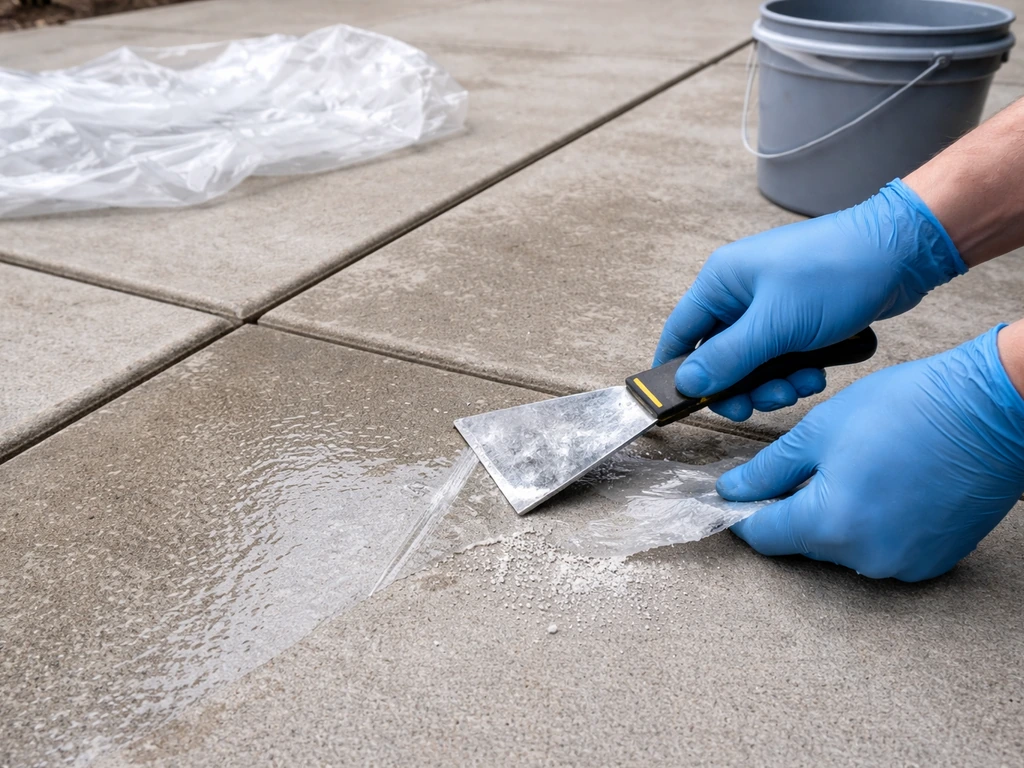
How to Remove Thompson’s Patio Sealer Step by Step
Step-by-step removal of Thompson’s patio sealer on concrete, brick, pavers, and stone, with safety, tests, and cleanup.
Can You Remove Patio Sealer? How to Strip It Safely
Learn if you can remove patio sealer and how to strip it safely by type, material, and method.