A stiff brush, the right cleaner, and about an hour is all it takes to get rid of algae on a brick patio. For most cases, a diluted bleach or sodium hypochlorite solution applied with a scrub brush removes algae completely in one session. If you prefer to avoid bleach, white vinegar or an oxygen-based cleaner works well for lighter growth. The key is knowing which method matches how bad the algae is, prepping the area properly so you don't damage your brick or mortar, and then doing a few simple things afterward so it doesn't come straight back.
How to Get Rid of Algae on a Brick Patio Safely
Dylan Hale
2 May 2026
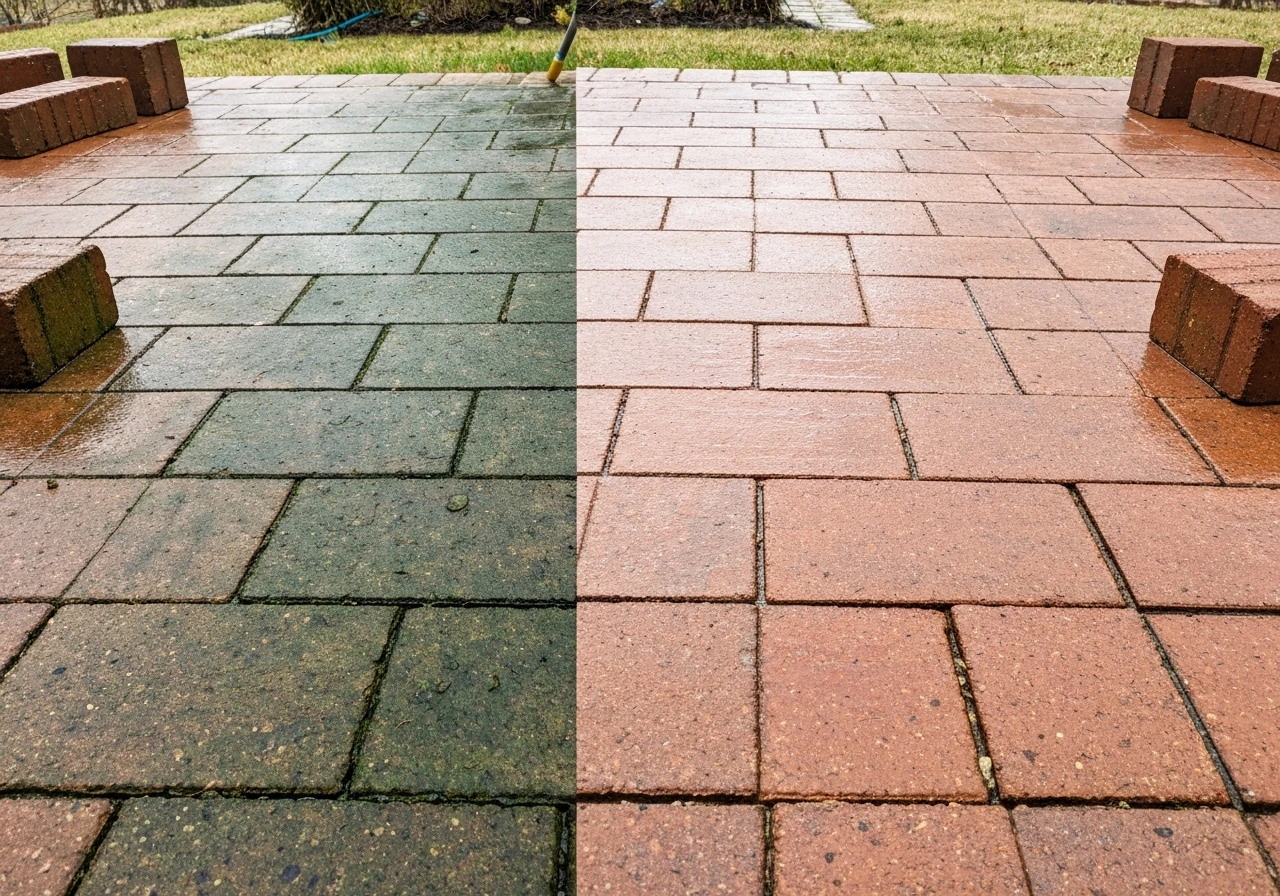
Why algae keeps showing up on your brick patio
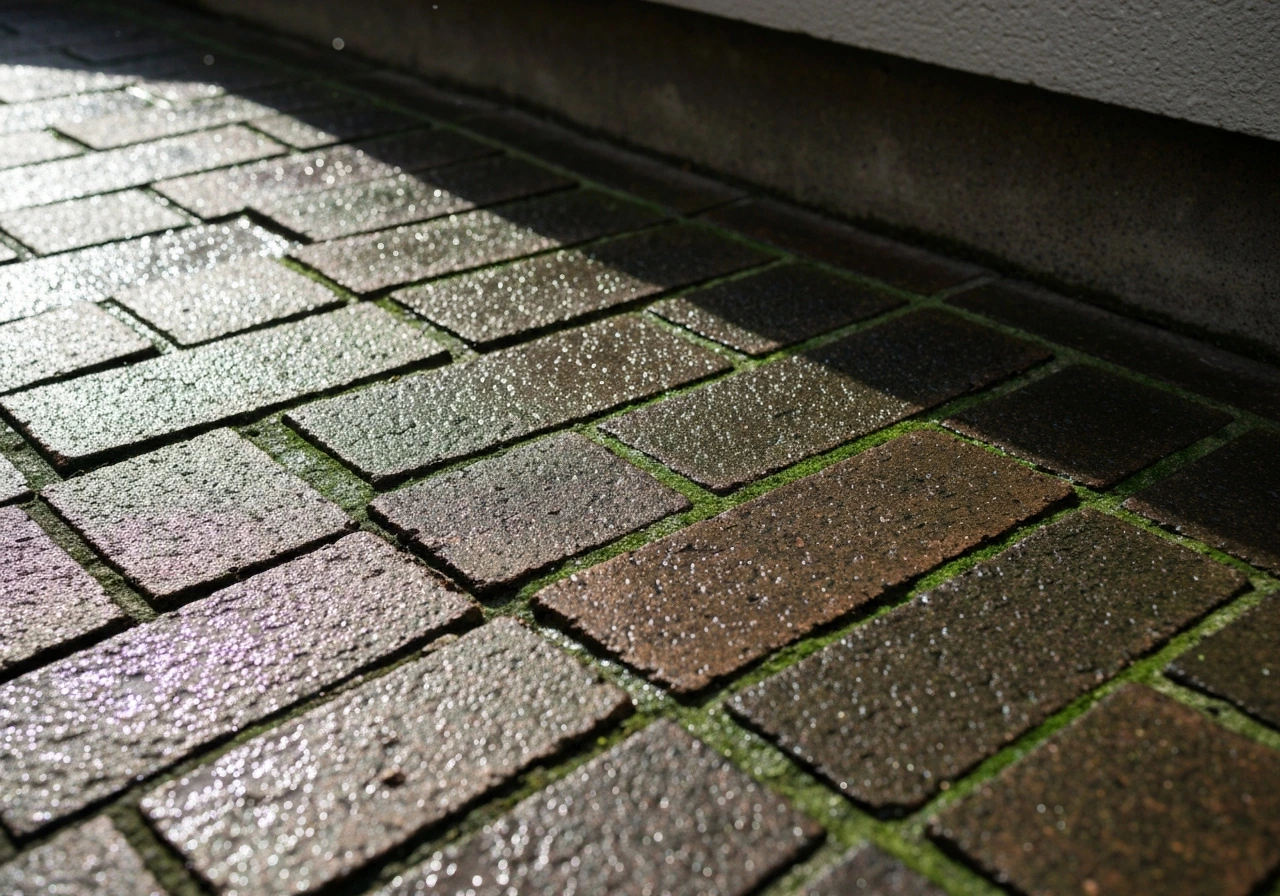
Algae on brick is almost always a moisture problem. Brick is absorbent, and shaded or poorly drained areas stay damp long enough after rain for algae spores to take hold and spread. If part of your patio sits under a tree, next to a fence, or under an overhang where it barely sees direct sun, that's almost always where you'll notice the slippery green or black film first. Standing water after heavy rain is a major red flag too. When puddles take more than a day to fully drain, you've got conditions that actively invite algae and mold.
Older brick is especially vulnerable because the surface gets more porous over time, giving algae more to grip onto. Organic debris like fallen leaves or dirt that collects in joints gives it an extra food source. The Environmental Literacy Council describes algae growth as a slimy, slick film, which is that classic wet-look green coating you're probably seeing. If it looks more like a flat, powdery dark stain, that may be mildew rather than algae, but the removal process is almost identical.
Prep before you touch the algae
Don't skip this part. A few minutes of prep prevents damage to your brick, your plants, and yourself.
- Protect nearby plants: Wet down any grass, garden beds, or potted plants around the patio with plain water before you start. This dilutes any cleaner runoff that reaches them. If you're using bleach, cover sensitive plants with plastic sheeting as extra insurance.
- Move furniture and clear the patio: Get everything off the surface so you can clean edge to edge without working around obstacles.
- Keep pets and kids away: This applies especially when using bleach or sodium hypochlorite. Keep the area off-limits until the surface has been fully rinsed and dried.
- Wear the right gear: At minimum, wear rubber gloves and eye protection. If you're using stronger cleaners, add old clothes you don't mind staining and closed-toe shoes.
- Test in a hidden spot first: Before cleaning the whole patio, apply your chosen cleaner to a small, inconspicuous area and let it sit for the full dwell time. Check that it doesn't discolor the brick or eat into the mortar joints. Older mortar is more vulnerable, so this step matters.
- Wet the brick surface: Give the patio a light rinse with plain water before applying any cleaner. Damp brick absorbs cleaner more evenly and reduces the risk of streaking.
Start here: gentle methods that actually work
If the algae growth is light to moderate, or if you have pets and prefer to avoid harsh chemicals, start with these approaches. They take more elbow grease but are genuinely effective and much kinder to your mortar joints and surrounding plants.
Scrubbing with dish soap and water
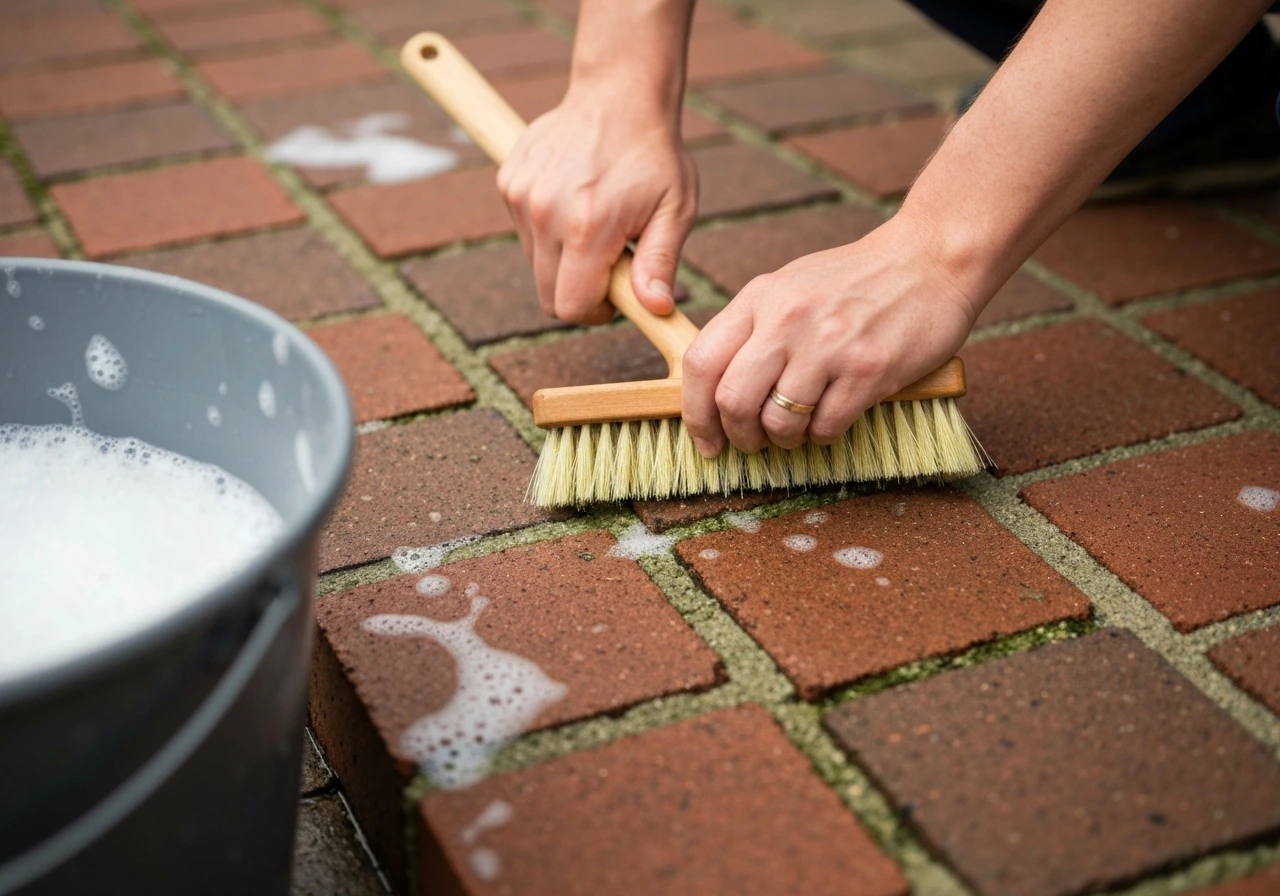
Mix a few generous squirts of dish soap into a bucket of warm water and scrub the affected areas with a stiff-bristled brush. A long-handled deck brush saves your back. Work in sections, scrubbing in circular motions and paying extra attention to the mortar joints where algae embeds itself. Rinse thoroughly with clean water. This works best for fresh or thin algae growth.
White vinegar solution
White vinegar is a solid option for environmentally-conscious readers dealing with mild to moderate algae. Mix equal parts white vinegar and water in a spray bottle or garden sprayer. Spray it directly onto the algae-covered areas and let it sit for 15 to 20 minutes before scrubbing. For heavier growth, use undiluted vinegar and extend the dwell time to 30 minutes. Scrub hard, then rinse well. I've found vinegar works well for green surface algae but struggles with the deeply embedded black variety. It's also worth noting that repeated vinegar use over time can gradually soften older mortar, so don't overdo it. There's a full breakdown of this approach in our guide on how to clean a brick patio with vinegar.
Baking soda paste
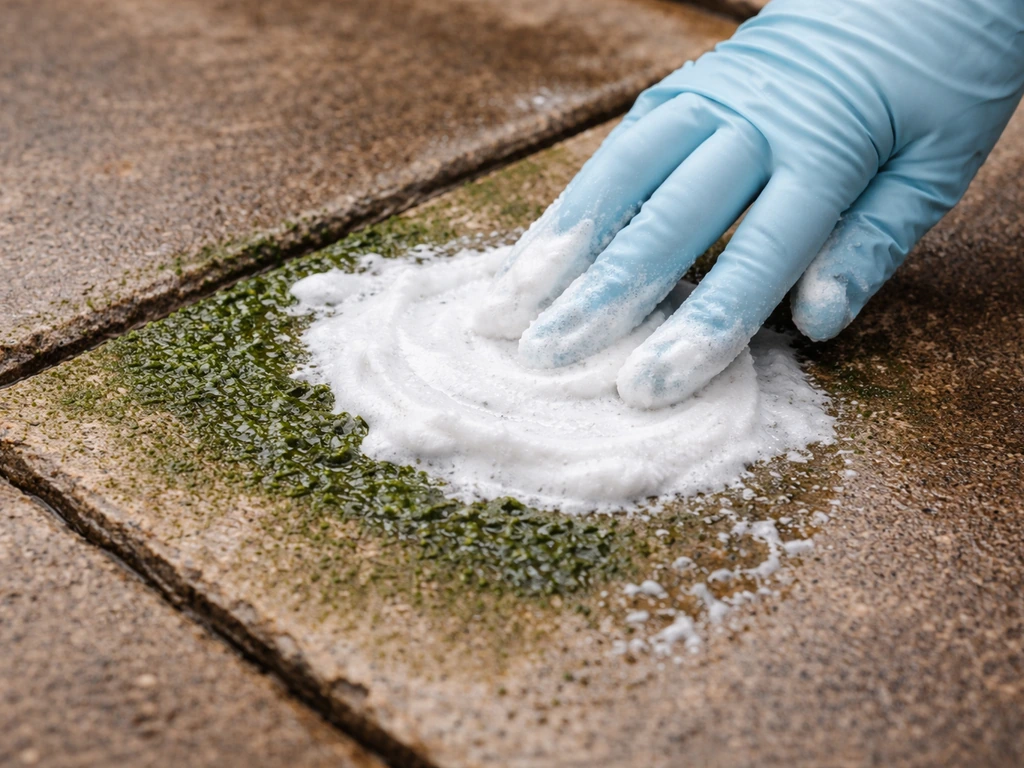
For stubborn patches in specific spots, make a thick paste with baking soda and water, apply it directly to the algae, let it sit for 10 minutes, then scrub and rinse. This is low-risk for brick and mortar and safe around plants. It works best as a spot treatment rather than a whole-patio solution.
Stronger cleaners for stubborn or heavy algae
When the gentle approach isn't cutting it, or when you've got thick, widespread algae coverage, it's time to step up. These options work significantly faster and handle cases where scrubbing alone won't get results.
Bleach and sodium hypochlorite
A diluted bleach solution is the most effective DIY option for killing algae fast. Mix one part household bleach (sodium hypochlorite, typically around 3 to 5 percent concentration) with three parts water. Apply it with a garden sprayer, a brush, or a sponge mop directly onto the algae. Let it dwell for 15 to 20 minutes. You'll often see the algae turn brown or white as it dies. Follow up with a stiff brush scrub, then rinse the entire patio thoroughly with clean water.
A few important cautions: blank" rel="noopener noreferrer">never mix bleach with vinegar or any other cleaner, as this creates toxic chlorine gas. Don't let the bleach solution sit longer than 30 minutes on older brick, as prolonged exposure can affect the mortar. CDC guidance says blank" rel="noopener noreferrer">bleach (sodium hypochlorite) should be used with appropriate safety guidelines when properly diluted. Rinse your plants again after cleaning to wash off any splashback. For more detail on this process, the guide on how to clean a brick patio with bleach covers it in depth. If you’re considering harsher acid treatments, our guide on how to clean brick patio with muriatic acid walks through safe steps and what to avoid. For example, you can use the same careful brick-prep and rinsing steps when learning how to whitewash a brick patio how to clean a brick patio with bleach.
Oxygen-based cleaners
Products like OxiClean or similar sodium percarbonate-based cleaners are a good middle ground between vinegar and bleach. They're gentler on surrounding plants than bleach but significantly more powerful than vinegar on thick algae. Mix according to the product's instructions (typically one scoop per gallon of warm water), apply to the wet brick, and let it dwell for 20 to 30 minutes. Scrub and rinse. These work especially well in mortar joints where bleach might be risky and vinegar might not be strong enough.
Commercial algae and patio cleaners
There are patio-specific algae and mold removers available at most hardware stores that are formulated to be safe on brick and mortar. Look for products labeled safe for masonry or pavers. These often work on contact with minimal scrubbing. Always follow label dwell times and rinse instructions.
Pressure washing brick: when it helps and when to skip it
Pressure washing can cut your scrubbing time dramatically, but it has real risks on brick. Done wrong, it erodes mortar joints, drives water deeper into porous brick, and can crack older or already-weakened units. Here's how to use it safely.
Settings that won't damage your patio
- PSI range: Stay between 1,200 and 1,500 PSI for brick patios. Anything above 2,000 PSI risks eroding the mortar joints and surface face of the brick.
- Nozzle choice: Use a 25-degree (green) or 40-degree (white) nozzle. Never use a 0-degree or 15-degree nozzle on brick. The zero-degree tip concentrates pressure enough to chip or score the surface.
- Distance and angle: Hold the wand at least 12 inches from the surface. Spray at a consistent angle, ideally 45 degrees to the surface rather than directly perpendicular, which drives water into the mortar.
- Move in even passes: Work in overlapping back-and-forth strokes and keep moving. Holding the wand in one spot even briefly can damage the surface.
When to skip the pressure washer entirely
Skip pressure washing if your mortar joints are already crumbling, cracked, or recessed more than about a quarter inch. High-pressure water will accelerate that damage significantly. Also skip it if your brick is older and shows signs of spalling (flaking surface faces). In those cases, hand scrubbing with a cleaner is the safer call. If you do pressure wash, do it after applying and dwelling your cleaner, not before. Applying a cleaning solution and then rinsing with the pressure washer gives you far better results than using the pressure alone.
Rinsing, finishing up, and preventing algae from coming back
Rinsing and neutralizing
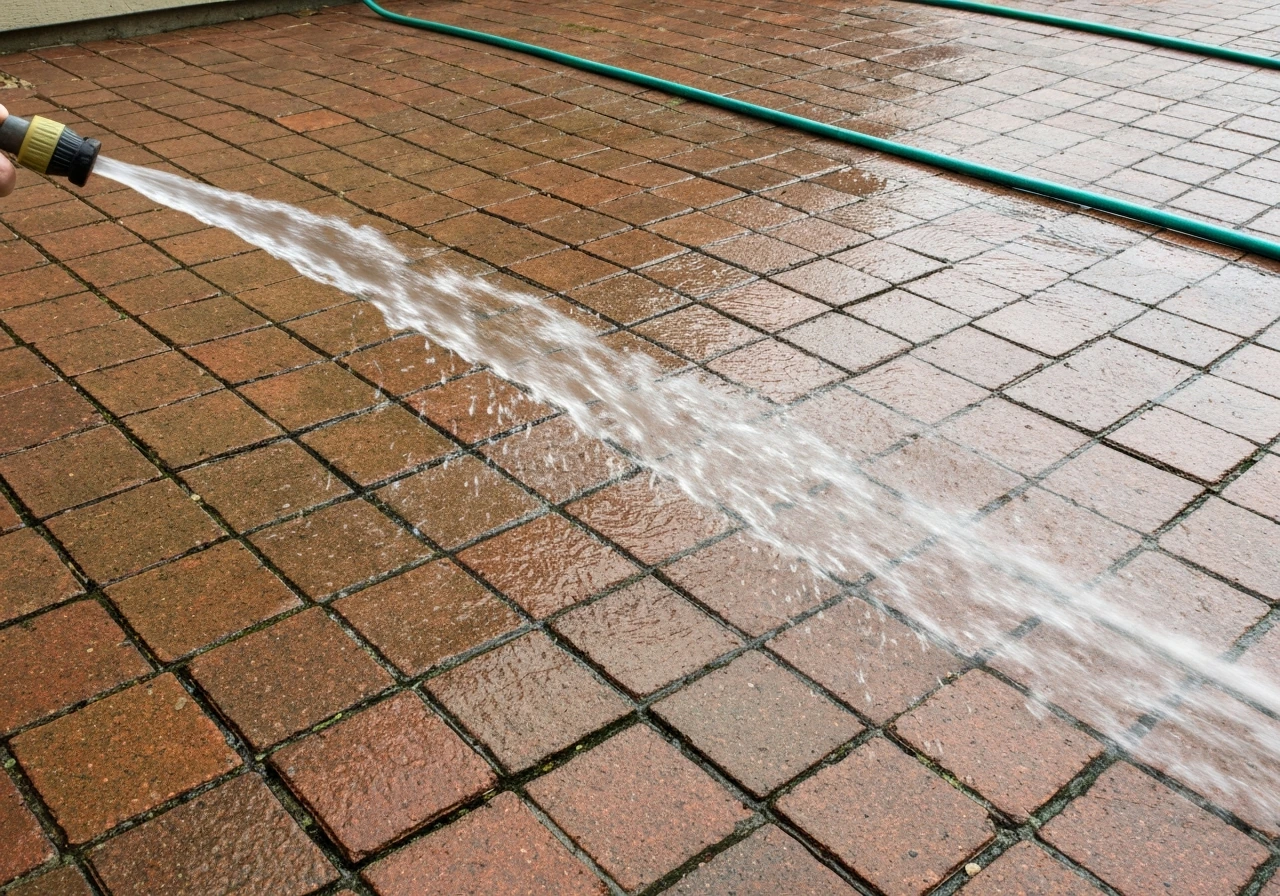
After any cleaning method, rinse the entire patio thoroughly with clean water, working from one end to the other so you're pushing dirty rinse water off the surface rather than back across cleaned areas. If you used bleach, do two full rinse passes. If you used vinegar (which is acidic) and want to neutralize it, sprinkle a light layer of baking soda across the rinsed surface, let it sit for five minutes, and rinse again. This isn't strictly necessary but it's a good habit, especially if you used a stronger acid concentration. Never combine leftover bleach and vinegar cleaners in the same bucket for disposal.
Stop the algae from coming back
The cleaning is the easy part. Keeping algae away long-term takes a few consistent habits and some attention to the underlying conditions driving moisture retention. If you’re dealing with mortar spots or smears on the patio surface, the approach is similar, but you’ll want to remove the buildup without damaging the surrounding masonry cleaning mortar off a patio.
- Improve drainage: If puddles form on your patio after heavy rain and take more than a day to drain, that's a drainage problem and algae will keep returning until you fix it. Check that the patio slopes slightly away from your house (about 1/8 inch per foot is the standard recommendation) and that drainage channels aren't blocked.
- Reduce shade where possible: Algae thrives in shade with poor air circulation. Trim back overhanging branches or hedges to get more sunlight and airflow across the patio surface.
- Keep the surface clear of organic debris: Leaves, dirt, and plant material sitting in the mortar joints feed algae. Sweep or blow the patio off regularly, especially in autumn.
- Apply a masonry sealer: A penetrating brick sealer reduces how much moisture the surface absorbs, which is one of the most effective long-term deterrents for algae and mold. Look for a breathable penetrating sealer rather than a film-forming one, which can trap moisture in the brick. Reapply every two to three years depending on foot traffic and weather exposure.
- Do a light maintenance clean once or twice a year: A diluted soap or vinegar wash each spring and fall, before algae gets a foothold, is far easier than dealing with a full infestation.
Choosing the right method for your situation
| Method | Best for | Effort level | Safe for plants/pets after rinse | Risk to brick/mortar |
|---|---|---|---|---|
| Dish soap + scrub | Fresh or light algae | High (lots of scrubbing) | Yes | Very low |
| White vinegar solution | Mild to moderate algae, eco-conscious cleaners | Medium-high | Yes | Low (avoid on crumbling mortar) |
| Oxygen-based cleaner | Moderate to heavy algae, safer alternative to bleach | Medium | Yes (rinse well) | Low |
| Diluted bleach/sodium hypochlorite | Heavy or widespread algae | Low-medium | Yes after thorough rinse | Low if diluted and rinsed promptly |
| Pressure washing | Large areas, post-chemical rinse | Low | Yes | Medium-high if used incorrectly |
For most homeowners dealing with a standard green algae problem, I'd recommend starting with the diluted bleach method if you want fast results, or the oxygen-based cleaner if you'd rather keep it gentler. Both work reliably on brick when used at the right dilution. If you're concerned about mortar integrity or working near a vegetable garden, the vinegar route is the safest starting point. If you decide to use muriatic acid instead, follow the safe application steps to protect the concrete and nearby surfaces vinegar route. And whatever you use, the prevention steps afterward are what actually keep the problem from cycling back every spring.
FAQ
Will algae on brick actually hurt the bricks or is it just cosmetic?
It’s usually not immediately structural, but it can accelerate surface wear because the slimy film holds moisture and organic debris in place. If you also see loose or recessed mortar joints, spalling brick faces, or persistent dampness after rain, treat the moisture cause and consider a professional inspection before repeated deep cleanings.
How can I tell if what I’m seeing is algae or mildew or efflorescence?
Algae tends to look like a wet-look green or black film that feels slippery when damp. Mildew often appears as a more matte dark growth that can smear when wet. Efflorescence is typically a dry, powdery white salt bloom, and scrubbing it won’t remove the underlying salts, it needs different handling.
Do I need to remove plants or protect landscaping before cleaning algae?
Yes, especially when using bleach or oxygen cleaners. Wet nearby plants first, then after rinsing, do a second rinse of any foliage or garden areas that could have splashback. For heavy algae, consider covering sensitive plants with a tarp shield to reduce direct chemical contact.
Is it safe to use a bleach solution on all brick patio types and sealing finishes?
Not always. If your brick is sealed or has a stain sealer, bleach can discolor or dull the finish, and it may require a longer neutral rinse. If you’re unsure, test in an inconspicuous spot and avoid prolonged dwell times on older mortar to reduce surface softening.
Can I clean algae after it rains, or should I wait for the patio to dry?
For best results, start when the surface is damp but not fully puddled. Very wet conditions dilute cleaners and can spread algae with rinse water. If puddles remain more than a day, focus on drainage improvements first, because chemical treatments will be short-lived.
What’s the safest way to rinse without recontaminating cleaned areas?
Work in sections and rinse from the cleanest end toward the dirtiest end so your runoff does not flow back across freshly cleaned brick. Use a gentle hose stream rather than a strong jet, unless you’re doing targeted pressure washing that you’ve confirmed is safe for your mortar condition.
How many times will I likely need to repeat cleaning to fully remove embedded algae?
Light, surface algae often clears in one session with scrubbing plus cleaner dwell time. Deep black staining in mortar joints may take a second round or an oxygen-based treatment, and if it keeps returning quickly, the underlying moisture issue is usually the real cause.
Why does algae come back so fast after I clean it?
Most quick returns come from persistent shade and moisture, ongoing debris feeding in joints, or drainage that keeps the area wet after rainfall. If you see growth mainly under trees or near overhangs, improve sunlight and airflow if possible, and clean out organic buildup in joints regularly.
Should I use a stiff brush or a scrub pad, and how hard can I scrub?
Use a stiff-bristled brush for algae in mortar joints, but avoid wire brushes or aggressive tools that can scratch brick faces and widen mortar gaps. Apply steady pressure, let the cleaner dwell, then scrub. If mortar is already cracked or recessed, reduce abrasion and switch to gentler chemical dwell plus light scrubbing.
Is neutralizing vinegar with baking soda always necessary?
It’s not strictly required, but it’s a smart safeguard, especially if you used undiluted vinegar or had significant dwell time. A light baking soda layer after rinsing helps prevent lingering acidity that can be rough on older mortar surfaces.
What should I do if bleach accidentally splashes on nearby surfaces like stone, concrete, or siding?
Rinse immediately with plenty of clean water. Don’t try to “spot treat” with another chemical, especially not vinegar, because mixing can create toxic fumes. If discoloration occurs, wait until fully dry before evaluating whether it’s cosmetic or a surface finish issue.
Can I combine cleaners to boost results, like vinegar then oxygen or bleach then vinegar?
Avoid combining in sequence if you’re not fully rinsing between steps. In particular, never mix bleach with vinegar or allow them to sit together in the same bucket. If you want multiple treatments, rinse thoroughly, let the surface dry slightly, then proceed with the next cleaner.
Does pressure washing ever make sense for algae on brick patios?
It can, only if mortar is in good shape and brick faces are sound. Don’t use it when mortar is crumbling, joints are significantly recessed, or you see spalling, because pressure can enlarge damage and force water deeper into porous brick.
What drainage or maintenance changes help prevent algae without more chemicals?
Clear debris from joints, remove leaves that trap moisture, and improve water runoff so the area dries within about a day after rain. If puddles form, consider grading or adjusting downspout discharge away from the patio, and keep overhanging growth pruned to increase drying sunlight.
Next Articles
How to Remove Thompson’s Patio Sealer Step by Step
Step-by-step removal of Thompson’s patio sealer on concrete, brick, pavers, and stone, with safety, tests, and cleanup.
Can You Remove Patio Sealer? How to Strip It Safely
Learn if you can remove patio sealer and how to strip it safely by type, material, and method.
How to Remove Resin From Patio Safely by Surface Type
Step by step guide to remove resin from patio by surface type with safe scraping, softening and solvent methods.