Bleach works really well on patio stone when you're dealing with mold, mildew, algae, moss, and other organic growth. Mix 1/2 cup of household bleach (sodium hypochlorite) with 1 gallon of water, apply it to the stone, let it sit for 10 to 15 minutes, scrub with a stiff brush, and rinse thoroughly with clean water. That combination handles the vast majority of green and black organic growth you'll see on outdoor patio stone. The catch is that bleach is not a one-size-fits-all solution. On certain stone types, especially calcite-based stones like limestone and marble, it can cause discoloration. And there are a few stain types, rust being the main one, where bleach will actively make things worse.
How to Clean Patio Stone With Bleach Step by Step
Dylan Hale
4 Jul 2026
When bleach works vs when it can damage your stone
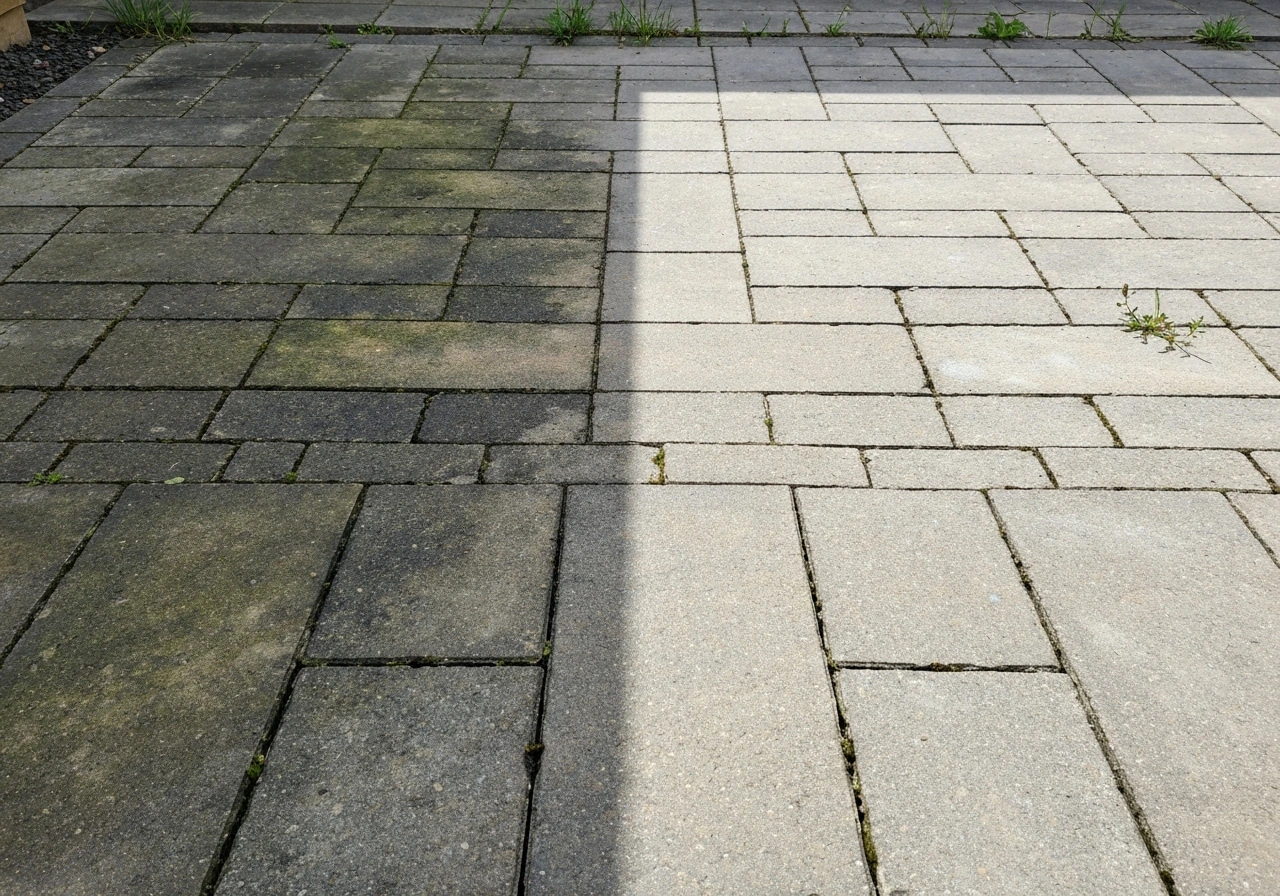
Bleach is at its best on organic growth. If your patio stone has gone dark green, black, or slippery with algae, mold, mildew, or moss, a diluted bleach solution will kill it fast and lift most of the staining. It also handles general grime and weathering that has built up on harder, non-porous stone surfaces. For patio scenarios, bleach is a solid first choice for routine cleaning and organic buildup.
Where bleach causes problems is on softer, calcite-based stones. Limestone and travertine are the main ones to watch. Sodium hypochlorite is highly alkaline and can react with these stones, potentially leaving behind yellow or white streaks and surface discoloration. Laticrete and other stone care authorities specifically flag marble, limestone, and travertine as sensitive to bleach, noting it can etch the surface and damage finishes. I've also seen reports of travertine pavers developing brownish patches after aggressive cleaning, and bleach can be part of that story. So if you have polished or honed natural stone, be cautious and test first.
The other hard rule: never use bleach on rust stains. Rust on patio stone comes from iron oxidation, and bleach will actually intensify the discoloration rather than remove it. For rust, you need an acid-based cleaner specifically designed for that purpose. Bleach is for organic growth, not mineral staining.
| Stone / Stain Type | Bleach Safe? | Notes |
|---|---|---|
| Concrete pavers (mold/algae) | Yes | Very effective; use standard dilution |
| Sandstone / flagstone (mold/algae) | Yes, with care | Test a small area first; avoid over-soaking |
| Travertine (organic growth) | Use with caution | Risk of discoloration; lower concentration recommended |
| Limestone (any stain) | Not recommended | Can cause yellow/white streaks and surface damage |
| Granite / quartzite (mold/algae) | Generally yes | Harder surface; rinse thoroughly |
| Rust stains (any stone) | No | Bleach makes rust stains worse — use acid-based cleaner instead |
| Grease / oil stains (any stone) | Limited effectiveness | Use degreaser; bleach won't cut through oil well |
Identify your stone type and what you're actually dealing with
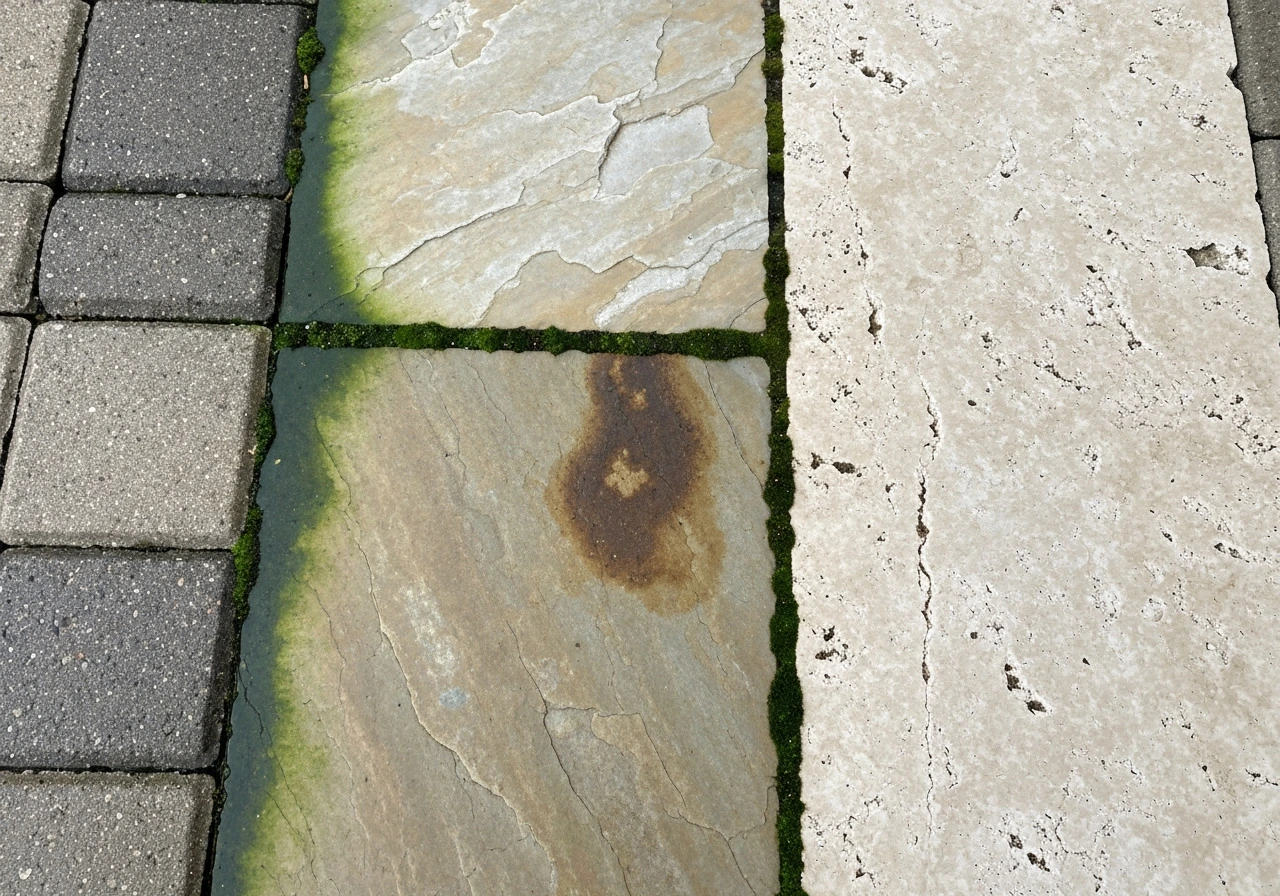
Before you mix anything, take two minutes to figure out what you have. Most homeowners have one of a few common types: concrete pavers, natural sandstone or flagstone, travertine, or limestone. Concrete pavers are usually uniform in color and texture, often grey or tan, and they're the most forgiving with bleach. Natural sandstone and flagstone are typically irregular in shape with a rough surface. Travertine has a distinctive pitted, almost honeycomb-like texture with natural holes. Limestone looks similar to travertine but tends to be smoother and more uniform.
Then look at what you're cleaning. Green or brown slime that appears in shaded or damp areas is almost always algae. Black spots or a fuzzy growth layer is mold or mildew. A grey-green crust that doesn't wipe off easily is likely lichen, which takes more dwell time and sometimes a second treatment. If you see an orange or reddish stain, that's rust, and bleach is the wrong tool. White powdery deposits are efflorescence (salt minerals migrating to the surface), and bleach won't help there either. Matching your cleaner to your actual problem is the biggest efficiency gain you can make before you even pick up a brush.
Safety and prep: protect your plants, yourself, and surrounding surfaces
Bleach runoff is the thing that kills plants and grass around your patio, so protecting them before you start is non-negotiable. Thoroughly water all plants, grass, and garden beds adjacent to the patio before you begin. This dilutes any bleach that reaches the soil. Then cover low-lying plants and grass edges with plastic sheeting or old towels if they're very close to the work area. After you finish, rinse the surrounding vegetation again with plain water.
For yourself: wear safety glasses or goggles (bleach splashes in the eyes is a genuine hazard), rubber gloves, and old clothes you don't mind ruining. Work outdoors where ventilation is naturally good. Never mix bleach with any other cleaning product. Mixing bleach with ammonia produces toxic chloramine gases, and mixing it with acids like vinegar produces chlorine gas. Both situations are dangerous. If you've used any other cleaner on the patio recently, rinse the surface thoroughly with plain water and let it dry before applying bleach.
- Clear furniture, pots, and decorations from the patio entirely
- Sweep off loose debris, leaves, and dirt first
- Pre-wet adjacent plants and lawn with plain water
- Cover nearby plants with plastic if they're very close to the stone
- Put on rubber gloves, safety glasses, and old clothes
- Have a garden hose ready with good water pressure before you start
- Work in the morning or evening to avoid applying bleach in direct midday sun, which speeds evaporation and reduces effectiveness
How to dilute and apply bleach: exact ratios and method
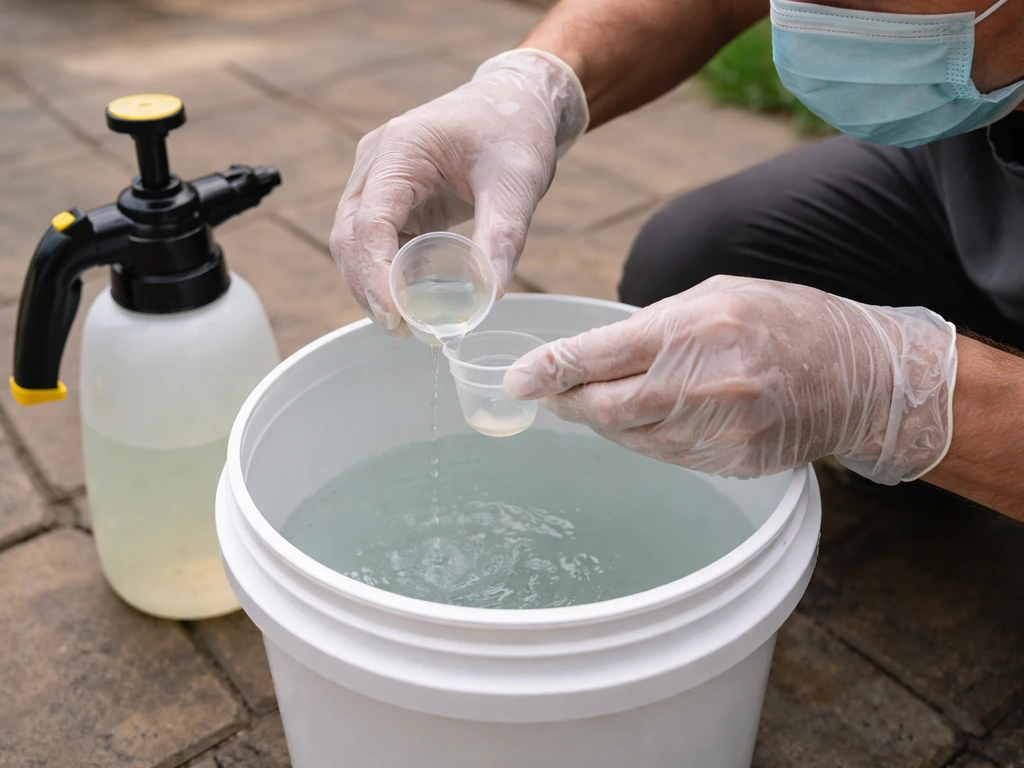
The standard dilution I use for patio stone is 1/2 cup of household bleach per 1 gallon of water. That comes from Unilock's natural stone cleaning guidance and it works well as a general-purpose starting point. If you're dealing with a heavy mold or algae problem, you can go up to 1 cup per gallon. For particularly stubborn lichen or black algae, some people go to 1 part bleach to 10 parts water, which is roughly equivalent. Stick with standard 5.25% to 8.25% sodium hypochlorite household bleach, not a concentrated industrial product.
For a larger batch, Clorox's guidance scales to 1 1/2 cups of outdoor bleach in 14 1/2 cups of water to make one full gallon of solution. Mix in a plastic bucket or a pump garden sprayer. Don't use a metal container.
Application method depends on your setup. A pump garden sprayer is the cleanest and most controlled method: you can coat the surface evenly without splashing and adjust coverage easily. A watering can works fine for broader areas. A mop works if you're doing a large patio and want to scrub as you apply. Apply the solution generously so the stone is visibly wet but not pooling into runoff channels leading straight to your garden.
Step-by-step application
- Mix your bleach solution: 1/2 cup bleach per 1 gallon of water in a plastic bucket or pump sprayer
- Pre-wet the patio stone with plain water from the hose (this helps the bleach solution spread and reduces the chance of concentrated bleach sitting in one spot)
- Apply the bleach solution evenly across the surface using a sprayer, watering can, or mop
- Make sure the entire stained area is well-coated and visibly wet
- Let it dwell for 10 to 15 minutes — set a timer so you don't forget
Scrubbing, dwell time, and rinsing it all out
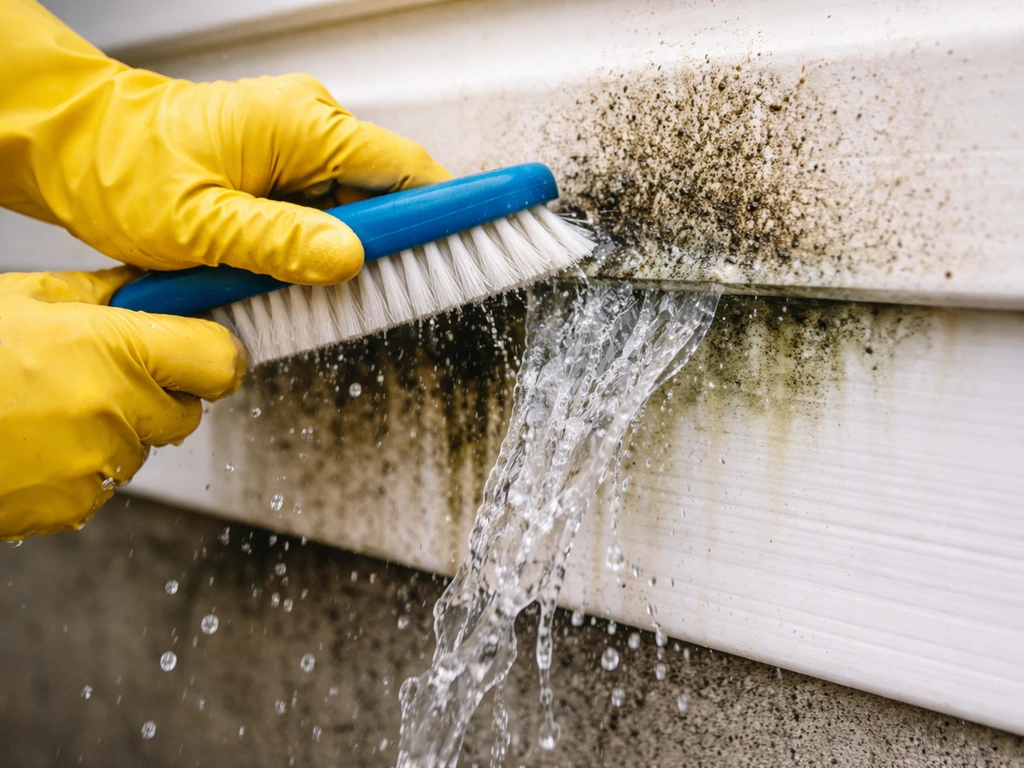
The 10 to 15 minute dwell time is the window where bleach is actively killing the mold, algae, and mildew at the root. Bleach works best when you let it sit long enough, but the exact time depends on the type of growth and weather conditions how long to leave bleach on patio. Don't let it dry out completely before you rinse. If it's a hot sunny day, you may need to reapply to keep the surface wet. After the dwell time, scrub with a stiff-bristle brush. Use a long-handled deck brush for large areas so you're not on your hands and knees the whole time. For grout lines and joints between stones, a smaller hand brush gets into the gaps better. Scrub in circular motions on heavy growth, back-and-forth on lighter staining.
Rinsing is the step most people underdo, and it matters more than people think. Bleach left on stone can continue to work and may cause discoloration over time. Rinse thoroughly with a garden hose on a strong setting, working from one end of the patio to the other and pushing the rinse water away from planted areas. I do two full passes minimum. You want the rinse water running clear before you're done.
If you have a pressure washer, it speeds things up but requires some care. Use a 25-degree (green) or 40-degree (white) tip, keep the nozzle at least 12 inches from the stone surface, and use a sweeping motion rather than holding it in one spot. On softer stone like sandstone, stay at lower pressure settings (around 1200 to 1500 PSI). High pressure on softer stone or directly into grout joints can dislodge sand, erode the surface, or drive grime deeper rather than lifting it. Pressure washing without pre-treating with bleach is fine for loose debris, but for mold and algae the bleach solution and dwell time does most of the real work.
If the stains don't lift: troubleshooting and when to switch cleaners
If you've done the full process and stains are still visible, give the patio 24 hours to fully dry before judging. Some discoloration looks worse wet. If the staining is genuinely still there after drying, a second application at a slightly stronger concentration (up to 1 cup bleach per gallon of water) with a longer scrub is a reasonable next step for mold and algae. Lichen, which has root-like holdfasts that anchor into the stone surface, sometimes needs two or three treatments over several days to fully loosen.
If bleach has caused unexpected discoloration, like a yellowing or white streaking on travertine or limestone, stop immediately. Rinse the area thoroughly with plain water. This kind of chemical reaction with calcite-based stone isn't always reversible at home, and in some cases a professional stone restoration service is the right call. Don't try to fix bleach discoloration with more bleach or a different acid-based cleaner on your own.
For lingering organic stains that bleach hasn't fully cleared, white vinegar is a practical alternative that's gentler on stone and surrounding plants. Mix equal parts white vinegar and water, apply it the same way, let it sit for 15 to 20 minutes, scrub, and rinse. Vinegar won't kill mold as aggressively as bleach, but it's safer for sensitive stone types and is a good option if you have limestone or travertine where bleach is risky. Never mix vinegar and bleach together for a "stronger" solution, as that combination produces chlorine gas.
Oxygen bleach (sodium percarbonate, sold as products like OxiClean Outdoor) is another genuinely useful middle ground. It's slower-acting than chlorine bleach but gentler on plants, safer for calcite-based stones, and still effective on algae and mold over a 20 to 30 minute dwell time. If you have pets or children who use the patio regularly, or if you're environmentally cautious about chlorine runoff, oxygen bleach is worth considering as your primary cleaner. It's also relevant if you're cleaning pavers or slabs rather than natural stone; the same principles apply but the material tolerance changes.
Quick comparison: chlorine bleach vs oxygen bleach vs vinegar
| Cleaner | Best For | Stone Compatibility | Speed | Plant Risk | Cost |
|---|---|---|---|---|---|
| Chlorine bleach (sodium hypochlorite) | Mold, mildew, algae, moss | Concrete, granite, quartzite (avoid limestone, marble) | Fast (10–15 min) | Moderate — rinse plants well | Low |
| Oxygen bleach (sodium percarbonate) | Algae, moss, general organic growth | Most stones including travertine and sandstone | Slower (20–30 min) | Low | Low–moderate |
| White vinegar | Light mildew, general grime | Better for sensitive stone | Moderate (15–20 min) | Very low | Very low |
Prevention: keeping mold and mildew from coming back
Mold and algae grow where moisture sits and sunlight doesn't reach. If your patio has shaded areas, poor drainage, or overhanging trees dropping debris, those spots will be the first to go green again. The most effective prevention is a simple routine. Sweep the patio every couple of weeks to remove organic debris like leaves and dirt, which hold moisture and feed algae. Once or twice a year, do a light diluted bleach wash even if you don't see visible growth. This preventive treatment kills early-stage spore growth before it becomes a problem.
Check your drainage situation. Water pooling on the patio after rain, especially in low spots or against the house, creates the perfect environment for algae. If you can improve the slope or clear blocked drainage channels, you'll clean less often. For joints between stones that stay damp, polymeric sand (the kind used in paver installation) is tighter than regular jointing sand and less hospitable to weed and mold growth.
After any bleach cleaning, consider applying a stone sealer once the patio is completely dry (give it at least 48 hours). A penetrating sealer reduces moisture absorption into the stone, which slows algae and mold growth between cleanings. It also makes future cleaning easier because growth sits on the sealed surface rather than in the stone's pores. This is especially useful on porous natural stone like sandstone or travertine.
Key do's and don'ts to keep handy
- DO pre-wet plants and rinse them again after cleaning
- DO use a 1/2 cup bleach per gallon of water dilution as your starting point
- DO let bleach dwell for 10 to 15 minutes before scrubbing
- DO rinse the patio surface thoroughly (at least two full passes with the hose)
- DO test bleach on a small hidden area if you have travertine or unusual stone
- DON'T use chlorine bleach on limestone or marble
- DON'T use bleach on rust stains — it makes them worse
- DON'T mix bleach with vinegar, ammonia, or any other cleaning product
- DON'T let bleach dry on the stone before rinsing
- DON'T use a pressure washer with a zero-degree (red) tip directly on stone joints or soft surfaces
FAQ
Can I use bleach on patio stone if the surface is already sealed?
Often yes, but only after testing. Bleach can break down or dull certain sealers (especially film-forming acrylics). Check the sealer type if you know it, then try a small hidden spot, wait for full drying, and inspect for whitening or tacky residue before treating the whole patio.
What bleach strength should I avoid for patio stone cleaning?
Avoid “concentrated” or industrial sodium hypochlorite products unless you dilute them exactly. Using stronger-than-recommended solutions increases the risk of surface etching, streaking on calcite stones, and lingering discoloration even after thorough rinsing.
Do I need to wet the patio before applying the bleach solution?
Not in the sense of soaking first, but pre-wetting can help prevent patchy results. Lightly misting dry, hot surfaces reduces rapid bleach evaporation so the solution stays wet for the full dwell time. Do not let runoff from the mist carry bleach into plant beds.
How long should I wait before I judge results after bleach cleaning?
Wait at least 24 hours, then reassess. Some discoloration looks worse while damp, and residual salt or mineral deposits can appear as the stone dries. If growth is still present after drying, re-treat based on what you’re seeing (organic growth versus minerals).
What should I do if the bleach smell is still strong after rinsing?
Rinse again with plain water and give the patio more time to air out. Strong odor usually means residual solution is still trapped in grout lines or pores. Avoid walking or letting pets step on it until the smell fades and the surface is fully dry.
Will bleach kill algae and mold permanently, or do I need more steps?
It kills what’s actively growing, but it will not stop regrowth. The pattern returns fastest in shaded or damp zones, so focus on prevention, like fixing drainage, improving light exposure, and doing periodic maintenance cleaning before growth becomes heavy.
Can I spot-clean only the dark areas instead of treating the whole patio?
You can, but plan on blending. Spot treatments can create lighter or darker patches after drying, especially on travertine, limestone, or sandstone. If you spot-treat, keep the treated area edges consistent, and rinse beyond the spots slightly to reduce visible boundaries.
What if I have green growth but also white powdery deposits on the stone?
Treat them as two different problems. White powder is often efflorescence, bleach will not remove it reliably, and too much bleach can leave extra residue. First identify the dominant issue (wipe test, dampness, and texture), then choose a cleaner matched to the deposit type.
Is it safe to use a pressure washer after bleach cleaning?
Yes, if you use it carefully, but avoid blasting directly into grout joints and close-range spraying on softer stone. Pre-treating with bleach is still key for algae and mold, and then pressure washing should be used as a rinse and debris lift, with moderate pressure and a wide sweeping motion.
How do I know if the stain is rust versus something bleach can remove?
Rust typically appears orange, reddish-brown, or looks like mineral streaking that reappears in the same spots, and it often feels like a stain rather than a surface film. If the area worsens or doesn’t improve with bleach, switch to an acid-based rust remover designed for masonry rather than repeating bleach.
Can I use bleach on colored concrete pavers without fading them?
Colored or integral concrete pavers are usually more tolerant, but bleaching can still lighten certain finishes or create uneven tone if rinsing is inconsistent. Always test in a corner, then confirm the paver color returns after full drying, not just immediately after rinsing.
What should I protect besides plants and grass when using bleach?
Protect nearby outdoor furniture, rugs, and painted surfaces (railings, steps, foundation trim), bleach can cause dulling or spotting. Cover or mask anything you do not want to risk, and keep splash control by using a pump sprayer and applying from the far side toward your exit.
Can pets or people use the patio right after cleaning?
Wait until the patio is fully rinsed and completely dry, and ideally until the chemical odor is gone. If you covered plants with sheeting, remove it only after the surrounding area is rinsed again with plain water.
Next Articles
How Long to Leave Bleach on a Patio for Cleaning
Get exact bleach contact times for patio mold and stains, with safe dilution, rinse steps, and alternatives to prevent d
How to Remove Thompson’s Patio Sealer Step by Step
Step-by-step removal of Thompson’s patio sealer on concrete, brick, pavers, and stone, with safety, tests, and cleanup.
Can You Remove Patio Sealer? How to Strip It Safely
Learn if you can remove patio sealer and how to strip it safely by type, material, and method.