For most patio cleaning jobs, leave diluted bleach on the surface for 10 to 15 minutes before scrubbing and rinsing. For patio slabs specifically, follow the same bleach contact-time rules, then scrub the surface and rinse thoroughly to prevent streaking or damage diluted bleach. That said, the exact time depends on two things: what you're treating (mold and algae need longer contact than general grime) and what your patio is made of (concrete can handle a longer soak than natural stone, which may not tolerate bleach at all). Get those two factors right and bleach is one of the most effective patio cleaners you can use. Get them wrong and you risk permanent discoloration or etched surfaces.
How Long to Leave Bleach on a Patio for Cleaning
Dylan Hale
2 May 2026
How long bleach needs to sit, based on what you're cleaning
The type of stain or growth you're tackling matters more than most people realize. Mold, algae, and mildew are living organisms that need enough contact time to actually die. General grime and surface discoloration just need the bleach solution long enough to lift and loosen the buildup.
| Target stain or issue | Recommended contact time | Notes |
|---|---|---|
| Mold and algae (black, green growth) | 10 to 15 minutes | Keep the surface visibly wet the whole time; reapply if it dries |
| Mildew stains | 10 minutes | Scrub before rinsing to break up the stain once bleach has worked |
| General grime or whitening | 5 to 10 minutes | Shorter dwell time is usually enough; rinse thoroughly after |
| Heavy or deeply embedded mold | 15 minutes (max) | Do a second treatment if needed rather than leaving bleach on longer |
Clorox's guidance for outdoor mold and mildew jobs is built around a 10-minute contact time, with the recommendation to blank" rel="noopener noreferrer">work in smaller sections so you can rinse each one before 10 minutes is up. Their ProResults outdoor bleach concentrate recommends waiting a full 15 minutes before rinsing. The CDC's baseline guidance for diluted bleach disinfection is at least 1 minute, but that's for disinfection on surfaces you're not trying to deep-clean. If you want the practical steps for bleaching a patio safely, follow the full workflow for mixing, contact time, scrubbing, and rinsing diluted bleach is at least 1 minute. For patio mold and algae, you want 10 to 15 minutes. The most important rule throughout: the surface must stay visibly wet. If it dries before you rinse, the bleach stops working and can leave streaky residue.
Contact time by patio material: what's safe for your surface
This is where a lot of people run into trouble. Bleach isn't one-size-fits-all when it comes to patio surfaces, and some materials simply shouldn't be treated with chlorine bleach at all. Here's what I'd recommend by material type.
Concrete
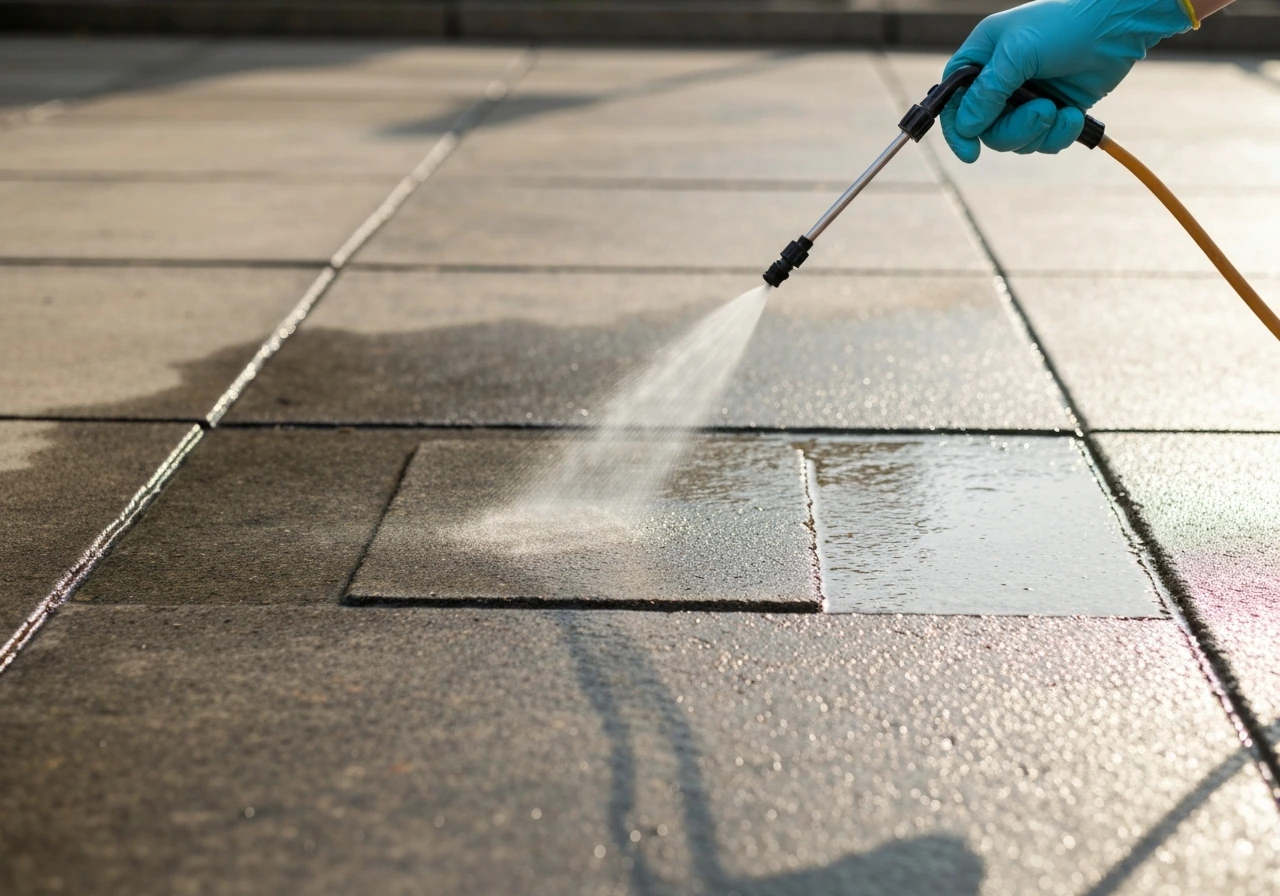
Concrete is the most forgiving surface for bleach. A diluted solution (see ratios below) can sit for 10 to 15 minutes without causing damage. For really stubborn mold or deep staining, you can push toward the 15-minute mark, but I wouldn't go much beyond that. Rinse thoroughly with a garden hose afterward. If you're working on a large concrete patio, divide it into sections so no area dries out before you rinse.
Brick
Brick handles bleach reasonably well, but the mortar between the bricks is more sensitive. Keep contact time to 10 minutes and rinse well. Repeated bleach treatments can gradually weaken mortar joints over time, so don't make it a weekly habit. For detailed guidance on cleaning patio stone and slabs with bleach, there's more material-specific advice elsewhere on this site. If you need a material-specific method, this guide on how to clean patio stone with bleach walks you through safe steps and timing cleaning patio stone and slabs with bleach.
Pavers (concrete and clay)
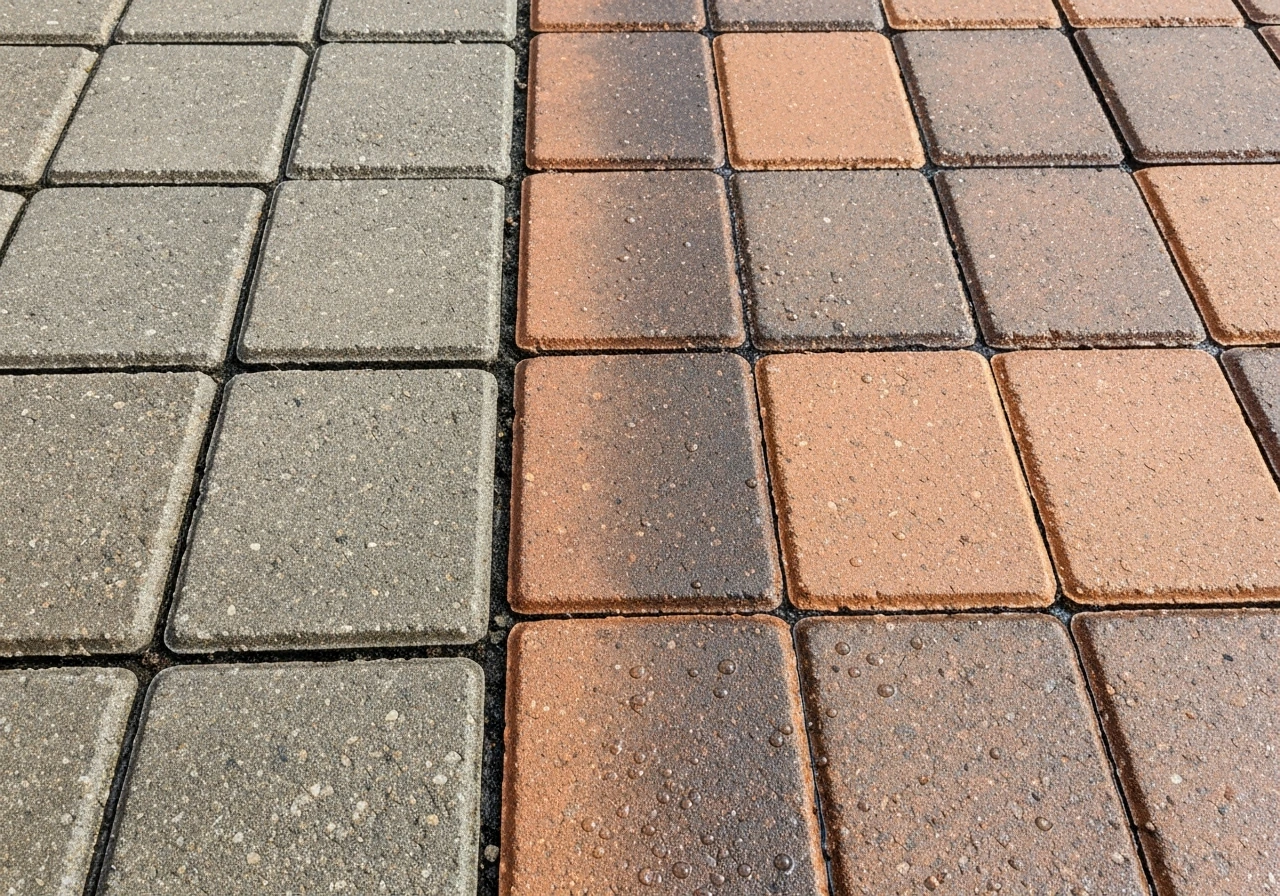
Concrete pavers behave similarly to concrete slabs and can handle a 10-minute soak without issue. Clay pavers are a bit more porous and can absorb more bleach solution, so I'd stick to 5 to 10 minutes and rinse promptly. Avoid letting bleach pool in the joints for extended periods. If you're specifically tackling algae or mold on pavers, the process for cleaning patio pavers with bleach has some extra steps worth following.
Natural stone (flagstone, travertine, limestone, slate)
This is where you need to be genuinely careful. Calcium-based stones like travertine and limestone are acid-sensitive and can etch (get permanent dull marks) from contact with bleach. Lowe's and LATICRETE/STONETECH both advise against using bleach on natural stone entirely. If you do decide to use a very diluted solution on a sealed, harder natural stone like certain flagstones, keep contact time under 5 minutes and rinse immediately, but honestly, for travertine or limestone I'd skip bleach altogether and go straight to the oxygen bleach or vinegar alternatives covered below.
Dilution ratios and mixing safety
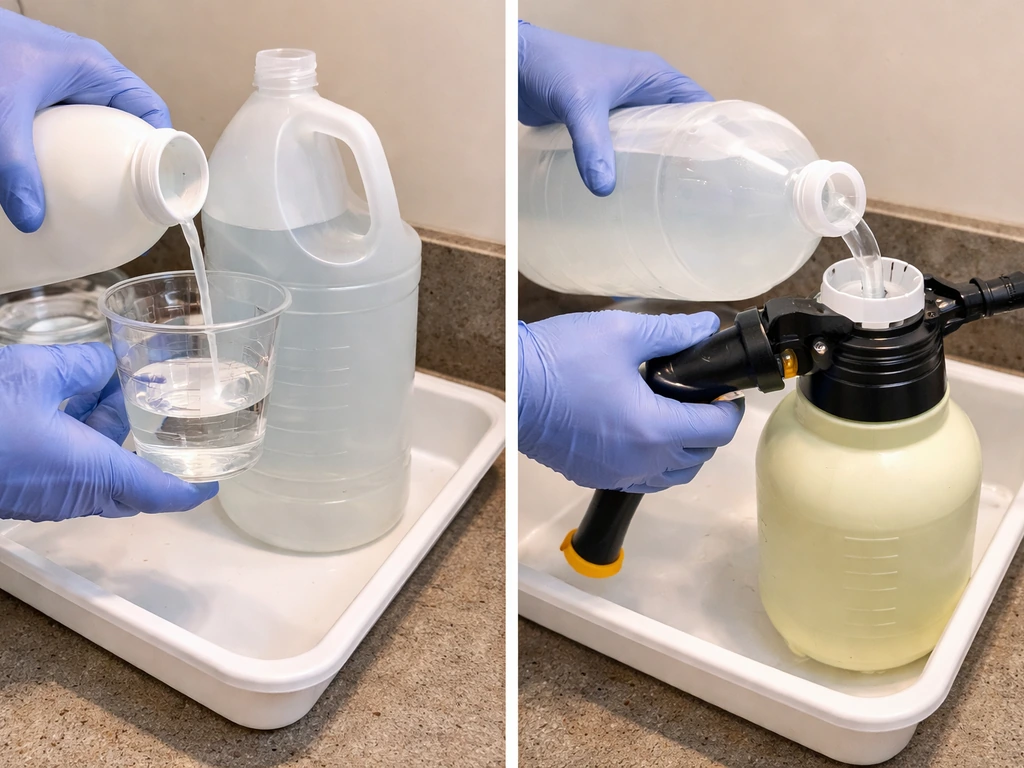
Using bleach at full concentration is unnecessary and increases the risk of surface damage and personal injury. Here are the dilution ratios I use and recommend depending on the job:
| Cleaning job | Bleach | Water | Approximate strength |
|---|---|---|---|
| General cleaning and whitening | 1 cup (240 ml) | 1 gallon (3.8 L) | ~0.5% sodium hypochlorite |
| Mold and algae on concrete or brick | 1.5 to 2 cups (360–480 ml) | 1 gallon (3.8 L) | ~0.7–1% |
| Light mildew stains | 1 cup (240 ml) | 1 gallon (3.8 L) | ~0.5% |
| Sensitive surfaces (if bleach is used at all) | 0.5 cup (120 ml) | 1 gallon (3.8 L) | ~0.25% |
Always mix bleach into water, not the other way around. And this is critical: never mix bleach with ammonia, vinegar, or any other cleaner. The CDC explicitly warns against mixing bleach with ammonia or other household cleaners because the resulting fumes can be toxic. That means if you've used any other product on the patio, rinse the area with water and let it dry before applying bleach.
On the safety gear front: wear rubber gloves and eye protection every time. Bleach splashes happen, especially when scrubbing. Work in a ventilated area (outdoors is ideal, but avoid windy conditions that blow solution back onto you). If you're mixing or applying indoors or in a covered area, make sure there's good airflow.
Step-by-step: the right workflow for contact time, scrubbing, and rinsing
- Sweep or rinse the patio first to remove loose debris. Bleach works better on a pre-cleaned surface.
- Mix your bleach solution using the ratios above. Pour it into a garden sprayer or a bucket.
- Wet the surface with plain water first if it's very dry or hot. This slows evaporation and helps the bleach stay wet longer.
- Apply the bleach solution generously. You want the surface visibly saturated, not just damp.
- Set a timer for 10 minutes (or 5 minutes for sensitive surfaces, 15 for heavy mold on concrete).
- Check at the halfway point: if the surface is starting to dry, reapply a light mist of the bleach solution to keep it wet.
- At the end of the contact time, scrub with a stiff-bristle brush. Use a long-handled deck brush for large areas. This step breaks up the loosened mold, algae, or stain.
- Rinse thoroughly with a garden hose, working from the highest point of the patio downward. Keep rinsing until no suds or bleach smell remains.
- If the stain hasn't fully lifted, let the surface dry completely and do a second treatment. Don't increase contact time beyond 15 minutes trying to force the result.
For large patios, work in 4 to 6 square-foot sections. Treat one section, rinse it, then move to the next. This is exactly what Clorox recommends to prevent any section from sitting longer than intended while you work on the rest.
How to tell if bleach is working vs. if you've left it too long
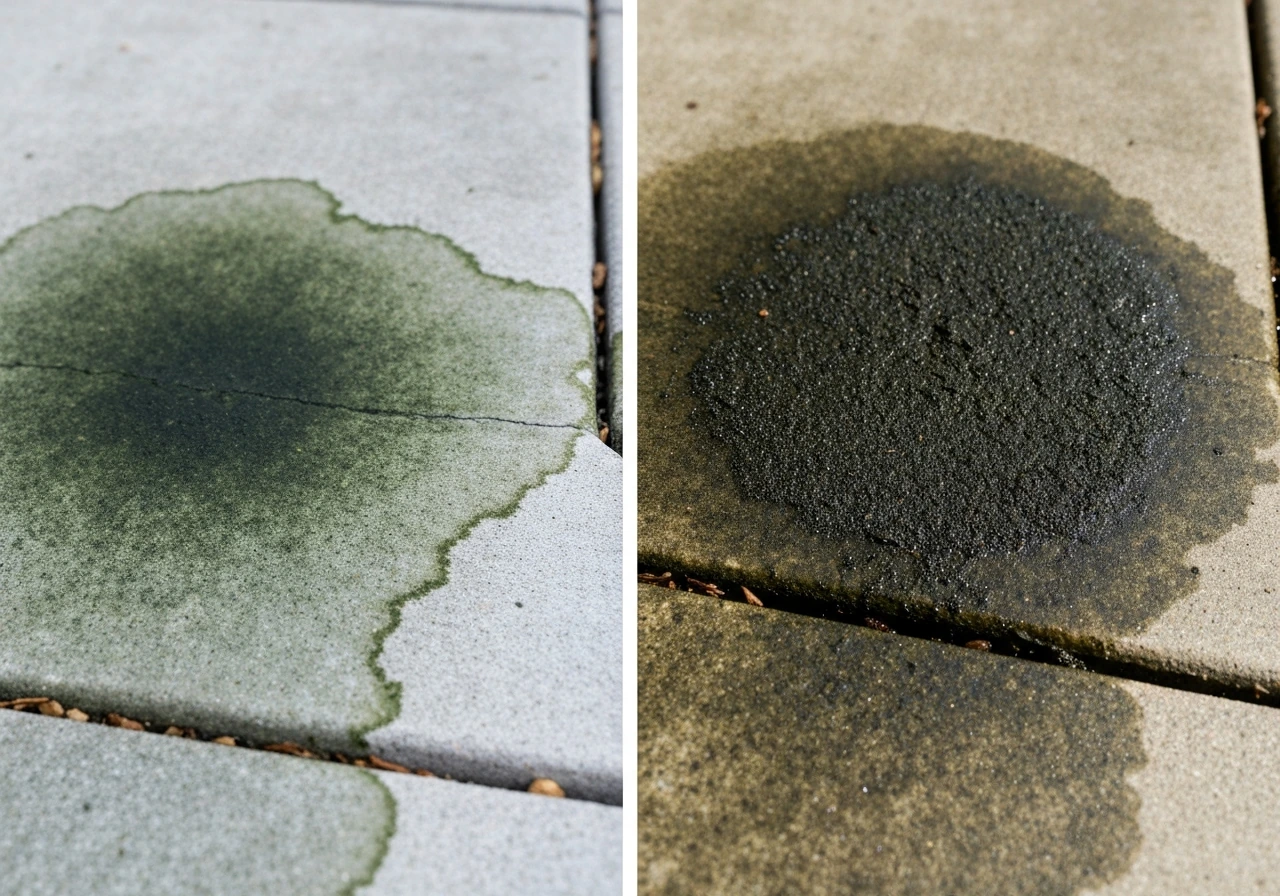
Bleach works visibly. Within the first few minutes on mold or algae, you should see the growth start to lighten from dark green or black toward gray or white. That's the bleach killing the organic matter. By the 10-minute mark, most of the discoloration should have lifted considerably, and scrubbing will take care of the rest.
Signs it's working correctly: the stained area is visibly lighter, the surface still looks wet and intact, and the bleach smell is present but not overwhelming.
Signs you may have left it on too long or used too strong a concentration:
- The surface has turned an uneven, blotchy white rather than a clean lightening
- Natural stone looks dull or has hazy patches (this is etching, and it's difficult or impossible to reverse)
- Brick mortar looks powdery or is crumbling at the edges
- The patio color looks washed out or faded unevenly compared to surrounding areas
If you notice etching on stone, rinse immediately and stop. Etching from bleach on calcium-based stones like travertine creates dull, calcified marks that are a form of surface damage. A stone restoration professional may be able to hone or re-polish mildly etched stone, but deep etching is permanent. This is exactly why skipping bleach on travertine and limestone in favor of oxygen bleach or a pH-neutral cleaner makes sense.
Gentler alternatives when bleach isn't the right call
If you're dealing with natural stone, have pets or kids who use the patio regularly, or want a less caustic approach, there are real alternatives that work well.
Oxygen bleach (sodium percarbonate)
This is my go-to recommendation for natural stone and for anyone who wants effective mold/algae removal with lower risk. Oxygen bleach breaks down into oxygen, water, and sodium carbonate, making it far less harsh than chlorine bleach. Mix it according to the package instructions (typically 1 cup per gallon of warm water), apply it to the surface, and let it sit for 15 to 30 minutes. It works more slowly than chlorine bleach but is safe for more surfaces, including most natural stones. Scrub and rinse the same way as you would with chlorine bleach. It's also biodegradable and safer around plants.
White vinegar
Vinegar is an option for light mildew on concrete or brick, but I want to be honest: it's less effective than bleach on established mold or algae and takes longer. Apply undiluted white vinegar, leave it for 20 to 30 minutes, scrub, and rinse. It works fine for routine maintenance cleaning but won't cut through a heavy mold infestation. Also important: never use vinegar on natural stone. Like bleach, it can etch calcium-based surfaces. And remember, never mix vinegar and bleach.
| Cleaner | Best for | Avoid on | Contact time | Mold/algae effectiveness |
|---|---|---|---|---|
| Chlorine bleach (diluted) | Concrete, brick, concrete pavers | Natural stone (travertine, limestone) | 10 to 15 minutes | High |
| Oxygen bleach (sodium percarbonate) | Concrete, brick, natural stone, wood | Sealed surfaces (check label) | 15 to 30 minutes | Medium to high |
| White vinegar | Light mildew on concrete or brick | Natural stone, heavy mold jobs | 20 to 30 minutes | Low to medium |
After the clean: drying, re-treatment, and stopping mold from coming back
Once you've rinsed the patio thoroughly, let it dry completely before walking on it or replacing furniture. For most surfaces in average conditions, that means at least a few hours in the sun. If your patio is in a shaded or damp area, give it a full day.
If staining or mold persists after the first treatment, wait until the surface is fully dry and do a second round. Don't be tempted to apply more bleach on top of a still-wet surface, as you won't get a more accurate contact time and you risk buildup.
Prevention is where you save yourself from doing this again in three months. Mold and algae thrive in damp, shaded conditions with poor airflow. Here's what actually helps:
- Improve drainage: check that water isn't pooling on or near the patio surface after rain. Re-grading or adding a drainage channel makes a real difference
- Clear debris regularly: leaves, dirt, and organic material left sitting on the patio feed mold growth. A quick sweep once a week prevents buildup
- Trim back overhanging trees or shrubs that keep sections of the patio shaded and damp
- Apply a patio sealer after cleaning: sealers reduce the porosity of concrete, brick, and pavers, making it harder for mold and algae to take hold. Reapply every one to two years depending on the product
- Do a light maintenance clean with diluted bleach or oxygen bleach once a season rather than waiting for a heavy infestation to build up
Done right, a bleach clean should last a season or longer before regrowth becomes a problem. Combined with good drainage and a sealer, you can significantly extend the time between treatments and keep your patio looking clean without repeating the heavy-duty scrub every few months.
FAQ
Can I leave bleach on a patio overnight if the mold is stubborn?
No. Contact time for patio cleaning is measured in minutes, not hours. If you cannot fully remove the growth, rinse after the recommended window, let the surface dry, then repeat with fresh diluted bleach the next day.
What if the surface dries before 10 to 15 minutes are up?
Rewet it so it stays visibly wet, then continue the contact time. If it has dried and you already rinsed, it usually will not have disinfected or bleached evenly, so plan a second pass after drying.
Do I need to wet the patio before applying bleach?
Yes, lightly pre-wetting helps avoid patchy results. A uniformly wet surface makes the solution spread more evenly and reduces the chance of streaking, especially on concrete and pavers.
How do I know the bleach dilution is strong enough without damaging the patio?
Use a measured dilution and avoid “stronger is better.” Stronger mixtures increase etching and discoloration risk, and you will not get better results if contact time is already within the safe range.
Is it okay to use bleach on outdoor wood decks or composite decking?
Generally, no for regular chlorine bleach, because many woods and composites can discolor or degrade. If you are unsure, test a small hidden area first or switch to an oxygen-based cleaner made for decking.
Should I rinse with plain water or can I use another cleaner right after?
Rinse thoroughly with clean water only. Do not apply a second chemical immediately after rinsing, especially anything acidic, ammonia-based, or detergent products, since residue chemistry can create unexpected reactions or dull spots.
Do I need to scrub immediately after the contact time, or can I wait a bit to rinse?
Scrub soon after the contact window and then rinse right away. Delaying the rinse increases streak risk and on sensitive materials can move the cleaning from “surface lift” into “surface damage.”
Can bleach be used around plants and grass without killing them?
Expect damage if solution contacts foliage or if runoff is heavy. Shield plants, wet the surrounding ground beforehand to reduce uptake, and rinse generously so bleach does not linger in puddles near roots.
What’s the best way to tackle a large patio so timing stays consistent?
Work in small sections (about a few square feet each). Treat one area, keep it wet for the target minutes, scrub, then rinse before moving on, so no section waits longer than you intended.
If bleach does not remove the stains after one treatment, should I increase the contact time?
Usually not. Keep the contact time within the safe window and, instead, do a second treatment after the patio fully dries. Extending time beyond the guideline increases the chance of dulling and residue without guaranteeing better stain removal.
Will bleach remove rust stains on a patio?
Bleach is not the best choice for iron-based rust. If you see orange or brown staining, you may need a rust-specific remover, then re-clean with bleach only if the surface material is bleach-compatible.
Is oxygen bleach an alternative I can use everywhere bleach is used?
Oxygen bleach is safer across more patio materials, but it still requires a rinse and appropriate dilution. If your patio is calcium-based stone like travertine or limestone, oxygen bleach is generally a better option than chlorine bleach.
Next Articles
How to Remove Thompson’s Patio Sealer Step by Step
Step-by-step removal of Thompson’s patio sealer on concrete, brick, pavers, and stone, with safety, tests, and cleanup.
Can You Remove Patio Sealer? How to Strip It Safely
Learn if you can remove patio sealer and how to strip it safely by type, material, and method.
How to Remove Resin From Patio Safely by Surface Type
Step by step guide to remove resin from patio by surface type with safe scraping, softening and solvent methods.